
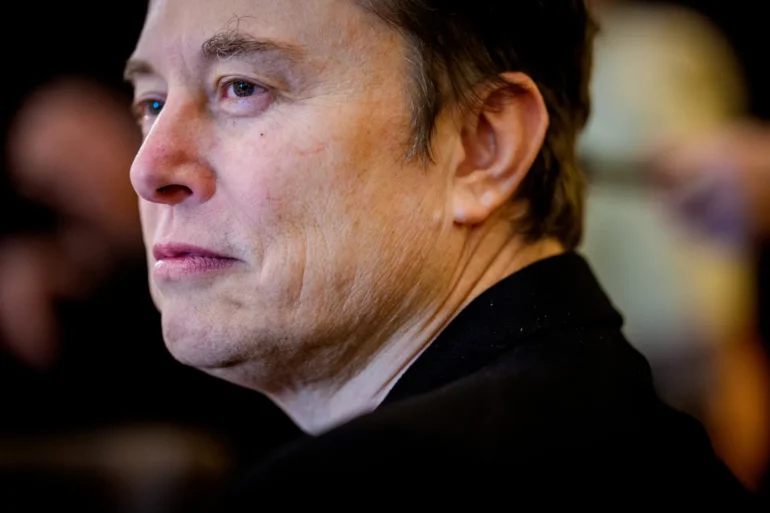
In a candid and surprisingly reflective interview on The Katie Miller Podcast released this week, Elon Musk dropped a bombshell that stunned political observers: the world’s richest man now says he would not repeat his high-profile role heading the Department of Government Efficiency (DOGE) if he had the chance to do it over.
“I mean, no, I don’t think so,” Musk said when asked directly whether he would run DOGE again. “I think instead of doing DOGE, I would have basically… worked on my companies, essentially.”
The admission marks a dramatic shift from the enthusiastic, meme-fueled energy Musk brought to the initiative earlier this year. DOGE—named after the Dogecoin meme and internet suggestions—was created in early 2025 with the ambitious goal of slashing federal spending and bureaucracy. Musk and supporters promised cuts as high as $2 trillion in the first year, later scaled back to $1 trillion and eventually to a more modest $150 billion.
Mixed Results and “Zombie Payments”
Musk described the effort as only “a little bit successful” or “somewhat successful” at best.
“We stopped a lot of funding that really just made no sense, that was just entirely wasteful,” he explained. One example he highlighted was the hundreds of billions of dollars in so-called “zombie payments”—automatic government disbursements that continued with no valid recipient or explanation. By requiring payment codes and justifications, DOGE managed to halt some of these outflows, which Musk estimated at $100–200 billion annually.
Yet even these limited victories came at a steep cost. “If you stop money going to political corruption, they will lash out big time,” Musk said, referring to fierce pushback from entrenched interests in Washington.
Personal and Corporate Blowback
The backlash extended far beyond Capitol Hill. Earlier this year, Tesla vehicles and dealerships became targets of widespread vandalism, with cars set on fire and properties damaged in protests tied to Musk’s role in the Trump administration. “In another timeline… the cars—they wouldn’t have been burning the cars,” Musk reflected somberly.
The political storm also took a personal toll. Musk told podcast host Katie Miller (a former DOGE advisor and wife of White House deputy chief of staff Stephen Miller) that his life is now “on hardcore mode,” with constant security concerns making ordinary public outings impossible. He cited “serious security issues” and even referenced the assassination of conservative commentator Charlie Kirk as part of the heightened threat environment.
Sleep has become another casualty. Musk revealed he frequently wakes up from “AI nightmares” and is running on roughly six hours a night, though he insisted his fears about artificial intelligence are entirely rational.
A Short-Lived Experiment
DOGE’s lifespan was remarkably brief. After just four months as a “special government employee,” Musk departed the administration in May following a public feud with President Trump. By November 2025—less than a year after its creation—the initiative had effectively dissolved. The Office of Personnel Management confirmed it no longer functioned as a centralized entity.
Independent experts have questioned DOGE’s claimed savings, noting the agency never released detailed accounting to verify its numbers. Thousands of federal workers were laid off or accepted buyouts during its 100-day blitz, but the promised trillion-dollar cuts never materialized.
Looking Back—and Forward
Despite the frustrations, Musk stopped short of calling DOGE a complete failure. Still, the regret in his voice was unmistakable.
“Knowing what I know now… I don’t think so,” he concluded when asked if he would ever return to the project.
For a man who once brandished a literal chainsaw at CPAC as a symbol of bureaucratic destruction, the admission is striking. What began as one of the most unconventional and heavily memed government experiments in modern history has ended with its own architect openly questioning whether the chaos, personal attacks, and diverted attention from Tesla, SpaceX, and xAI were worth it.
In Musk’s own words: the chainsaw cut something, but maybe not enough—and the scars it left run deeper than anyone expected.