
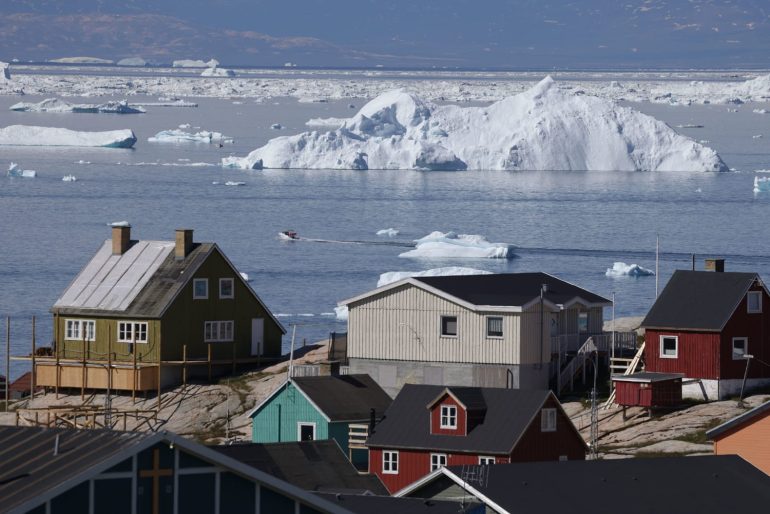
On December 23, 2025, President Donald Trump reignited international controversy by declaring Greenland “essential” for United States national security. Speaking to reporters at his Mar-a-Lago residence in Florida, Trump announced the appointment of Louisiana Governor Jeff Landry as a special envoy to the Danish Arctic island. The president described Greenland as vital to American defense interests, insisting that the U.S. needs the territory “not for minerals” but to counter potential threats from Russia and China in the region. Landry, in turn, stated that his role would involve efforts to make Greenland “a part of the US,” a comment that amplified concerns in Copenhagen and Nuuk.
The remarks drew immediate and sharp criticism from Danish Prime Minister Mette Frederiksen and Greenland’s Prime Minister Jens-Frederik Nielsen. In a joint statement, they declared, “You cannot annex another country… Not even with an argument about international security.” They emphasized that “Greenland belongs to the Greenlanders” and firmly rejected any U.S. takeover. Denmark also summoned the U.S. ambassador to explain the appointment, underscoring the seriousness with which the Kingdom of Denmark views the matter.
Trump’s interest in Greenland dates back to his first term in office (2017–2021), when he publicly floated the idea of purchasing the island from Denmark—an idea that was quickly dismissed by Danish leaders and led to the cancellation of a planned state visit. Since returning to the White House in January 2025, Trump has repeatedly raised the issue, refusing to rule out the use of military force if necessary. Earlier in the year, he remarked that the U.S. would “go as far as we have to” to secure its interests.
Strategic Importance of Greenland
Greenland’s location makes it a cornerstone of Arctic geopolitics. Geographically part of North America, the island lies roughly 1,800 miles from New York City—closer than its distance to Copenhagen, Denmark’s capital, which is about 2,174 miles away. With a population of only around 57,000, Greenland remains a semi-autonomous territory under Danish sovereignty but has enjoyed extensive self-governing powers since 2009. These powers include the right to hold a referendum on full independence.
The island hosts the Pituffik Space Base (formerly known as Thule Air Base), a key U.S. military installation used for missile warning systems, surveillance, and Arctic monitoring. Trump has argued that Greenland’s position between North America and Europe provides the shortest transatlantic route for military and commercial purposes. He has also highlighted the need to monitor the GIUK gap (the waters between Greenland, Iceland, and the United Kingdom), a critical chokepoint for Russian and Chinese naval vessels entering the Atlantic.
Beyond defense, the Arctic’s strategic value has grown due to rapid climate change. The region is warming at four times the global average, causing ice sheets to melt and opening new shipping lanes and access to untapped resources. This shift has attracted increasing interest from global powers. Russia has expanded its military presence in the Arctic, deploying missile systems and conducting weapons tests. China has sent vessels capable of military surveillance and resource exploration, while Canada has unveiled new security policies to counter growing Russian and Chinese activity.
Mineral Wealth and Economic Appeal
Although Trump has downplayed the role of minerals in his interest, Greenland is rich in rare-earth elements, uranium, zinc, and other critical raw materials essential for electronics, renewable energy technologies, and modern industries. The island also holds potential oil and gas deposits, though extraction remains restricted. Surveys indicate that Greenland contains a substantial share of the critical minerals identified by the European Union as vital for the green energy transition. While Trump insists that security—not resources—is the primary concern, the combination of strategic location and mineral wealth makes Greenland an attractive target for influence.
Responses from Greenland, Denmark, and the International Community
Greenland’s leaders have consistently expressed openness to enhanced U.S. security cooperation on the island, particularly at existing facilities like Pituffik. However, they strongly oppose any pressure to cede sovereignty. Prime Minister Nielsen told local media that while Greenland welcomes U.S. efforts to bolster Arctic security, “going from that to pressuring to take over a country that is populated and has its own sovereignty is not acceptable.”
Public sentiment in Greenland favors greater independence from Denmark but shows little support for joining the United States. Past U.S. visits, including a March 2025 trip by Vice President JD Vance and other officials, have been met with denials of official invitations, highlighting local sensitivities.
Denmark and its European allies have rallied in defense of Greenland’s territorial integrity. European Union leaders, including Commission President Ursula von der Leyen and European Council President Antonio Costa, reaffirmed that territorial sovereignty is a fundamental principle of international law. French President Emmanuel Macron also voiced support, stating that Greenland “belongs to its people” and that Denmark serves as its guarantor.
Even Russian President Vladimir Putin has weighed in, describing Trump’s interest as serious and predicting continued U.S. efforts to advance its interests in the Arctic. Putin also expressed concerns about the NATO membership of Finland and Sweden, both of which have Arctic borders.
Could the United States Take Greenland by Force?
Most experts consider military action highly improbable. Marc Jacobsen, a professor at the Royal Danish Defence College, argues that an invasion would effectively end NATO, a 1949 alliance co-founded by the United States and Denmark. Such a move would also devastate Trump’s international reputation and any aspirations for diplomatic achievements or recognition, such as a Nobel Peace Prize.
Jacobsen believes that more reasonable voices within the U.S. government would prevent such an extreme step. Instead, he sees Trump’s strategy as focused on gaining influence through diplomatic channels, strategic investments, and narratives that portray Denmark as an inadequate partner in Arctic security. The appointment of Landry as special envoy and other related moves are viewed as part of this broader effort.
Broader Implications for the Arctic
The renewed focus on Greenland underscores the escalating geopolitical competition in the Arctic. As climate change transforms the region, access to new trade routes and resources has become a priority for multiple nations. The United States, Russia, China, Canada, and European countries are all positioning themselves to secure advantages in what is increasingly seen as a new frontier of global power.
While the prospect of U.S. annexation remains remote, Trump’s statements and actions have heightened tensions and forced Denmark and Greenland to reaffirm their sovereignty. The situation highlights the delicate balance between national security concerns, international law, and the aspirations of small territories caught in the middle of great-power rivalry.
As the Arctic continues to change, the question of Greenland’s future will likely remain a flashpoint in international relations for years to come.