
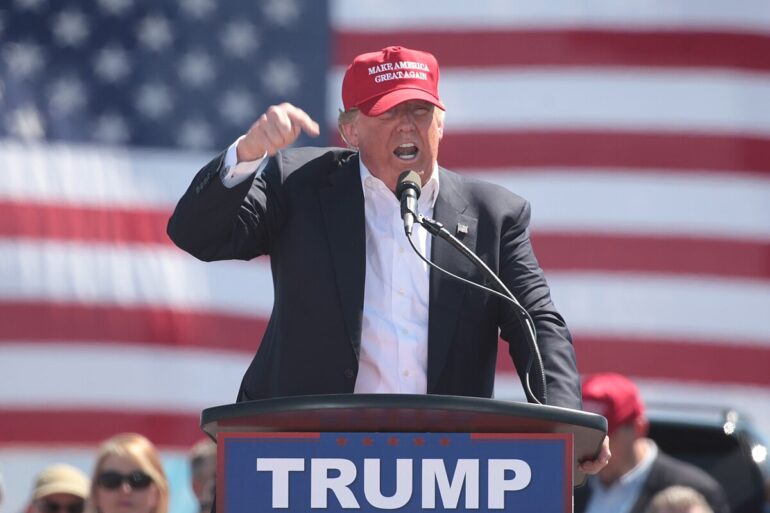
In recent weeks, President Donald Trump and his Make America Great Again (MAGA) supporters have sparked controversy by bringing back a once-taboo slur: the “r-word,” a term historically used to describe people with intellectual disabilities but now widely seen as offensive. This resurgence, according to watchdog groups, stems from Trump’s return to power and a broader push to declare the end of “woke” culture. Disability advocates are pushing back, arguing that the word’s revival harms vulnerable communities and reflects a troubling shift in public discourse.
The “r-word” has a complicated history. Coined in the late 19th century by medical professionals as a diagnostic term to replace harsher labels like “feeble-minded,” it was once commonly accepted. Organizations like The Arc, which supports Americans with intellectual disabilities, even included it in their names and public campaigns as late as the 1980s. Celebrities such as Barbra Streisand appeared in ads warning, “My next child could be r—–ed. So could yours.” However, over time, the word morphed into a casual insult for anyone deemed foolish or incompetent, detached from its original meaning. This led to widespread efforts to retire it. In 2009, advocacy groups launched the “Spread the Word to End the Word” campaign, and in 2010, Congress passed Rosa’s Law, replacing “mental retardation” with “intellectual disability” in federal statutes. The Supreme Court followed suit in 2014 during a key death penalty case.
Despite these advances, the term is making a comeback under Trump’s influence. On Thanksgiving Day 2025, Trump took to social media to label Minnesota Governor Tim Walz, a former Democratic vice presidential nominee, “seriously r—–ed” for criticizing his immigration policies. This wasn’t an isolated incident. Trump has a track record of using the slur against opponents, including reportedly calling Vice President Kamala Harris by the term during the 2024 election and mocking his own Attorney General Jeff Sessions in Bob Woodward’s 2018 book Fear: Trump in the White House. Beyond Trump, allies like Elon Musk have repeatedly tweeted the word, drawing criticism from disability groups. Podcaster Joe Rogan, a Trump endorser with over 20 million YouTube subscribers, celebrated its return in an April 2025 episode, calling it “one of the great culture victories.” Even on Fox News, usage has spiked: Media Matters for America reported the term appeared 23 times in 2025 so far, up from just eight in 2024, with Greg Gutfeld’s late-night show leading the charge at 17 mentions.
For many in the MAGA movement, reviving the “r-word” is more than just edgy talk—it’s a deliberate act of defiance against what they view as oppressive political correctness. Political activist Mark Meckler, former CEO of the conservative platform Parler, argued in a December 9, 2025, livestream that the word has been unfairly “driven out of use” by “thought police” on the left. He claimed it simply means someone who’s “dumb or lame or ridiculous,” not an attack on people with disabilities. Supporters frame this as resistance to “cultural Marxism,” a term they use to describe progressive efforts to enforce sensitivity and inclusivity. Angelo Carusone, president of the liberal-leaning Media Matters, sees it as symbolic: “It is an indication that woke is dead, that they’re back and that they have cultural dominance.” Celebrities aligned with Trump, like musician Kid Rock, have echoed this by using the slur to bash figures such as Dr. Anthony Fauci.
Yet, not everyone on the right is on board. Some conservatives, including those with personal connections to disabilities, have condemned the trend. In 2010, former Alaska Governor Sarah Palin, whose son has Down syndrome, demanded the resignation of Obama aide Rahm Emanuel for using the term. More recently, Indiana State Senator Mike Bohacek, whose daughter also has Down syndrome, cited Trump’s language as a reason for voting against a redistricting plan in 2025, stating it has real consequences. Right-leaning podcaster Brad Polumbo, while supportive of some Trump policies, posted on X on December 1, 2025: “I really hate the president using ‘r—-d’ as an insult… There are thousands upon thousands of special-needs Americans who will be genuinely hurt by this.” The Special Olympics reinforced this in a December 4 post, urging people to “#ChooseToInclude and stop using the r-word, today and always.”
The debate highlights deeper issues around free speech and power. Will Creeley, legal director of the Foundation for Individual Rights and Expression (FIRE), noted that “word policing is a function of power, and whoever is wearing the proverbial boots at the time” sets the rules. Critics argue Trump’s rhetoric goes beyond words, pointing to policy moves like the March 2025 withdrawal of 11 guidelines under the Americans with Disabilities Act, which advocates say will reduce accessibility and services for disabled individuals.
As Trump’s inflammatory language escalates—evident in incidents like calling a female reporter “quiet, piggy” amid falling poll numbers—the revival of the “r-word” underscores a polarized cultural battle. While MAGA allies celebrate it as a win against “cancel culture,” opponents warn it normalizes harm and erodes compassion. In a society still grappling with inclusivity, the question remains: Will this resurgence stick, or will advocacy efforts push it back into the shadows?