
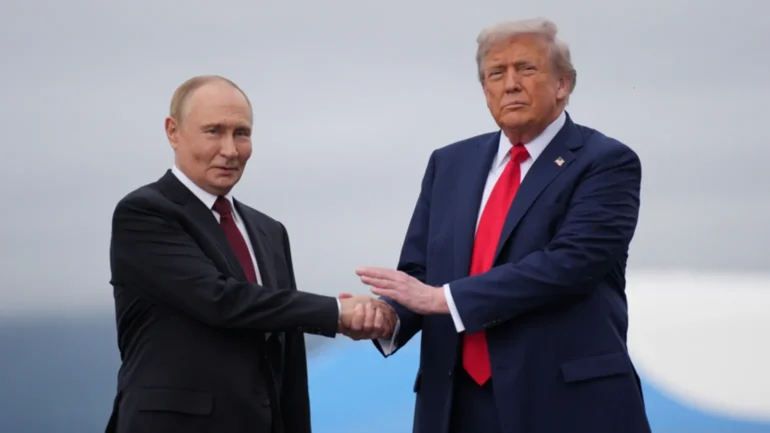
In a surprising turn that has set off alarm bells across Europe, the Kremlin has welcomed the Trump administration’s newly released National Security Strategy, describing it as largely in line with Russia’s own worldview. Kremlin spokesman Dmitry Peskov told Russia’s state news agency TASS that the adjustments in U.S. policy “are largely consistent with our vision” and called the document “a positive step,” though Moscow will continue studying it before final conclusions.
The 33-page strategy, unveiled this week, marks a sharp departure from previous U.S. policy. Most strikingly, it does not label Russia as a direct threat to the United States. Instead, it uses unusually harsh language about Europe, warning of “civilisational erasure” on the continent and claiming that in twenty years or less, parts of Europe could become “unrecognisable.” The document questions whether some European nations will even have economies and militaries strong enough to remain reliable American allies.
Among the strategy’s priorities are combating foreign influence operations, ending mass migration, rejecting what it calls EU “censorship,” and restoring “Western identity.” It openly praises the rise of “patriotic European parties”—a phrase widely understood to refer to far-right and nationalist movements—and says the United States “encourages its political allies in Europe to promote this revival of spirit.”
On the war in Ukraine, the document accuses the European Union of blocking American efforts to end the conflict and declares that Washington must “re-establish strategic stability to Russia” in order to stabilize European economies. The softer tone toward Moscow has fueled European fears that the Trump administration may pressure Kyiv into major concessions in ongoing peace talks.
European leaders reacted quickly and critically. German Foreign Minister Johann Wadephul insisted that the United States “will remain our most important ally” in NATO but pushed back on Washington lecturing Europe about freedom of expression or the organization of democratic societies. Polish Prime Minister Donald Tusk posted on social media to his “American friends”: “Europe is your closest ally, not your problem,” reminding them of shared enemies and common security interests.
Former Swedish Prime Minister Carl Bildt was blunter, tweeting that the document “places itself to the right of the extreme right.” The criticism comes as the Trump administration has warmed to Germany’s far-right Alternative für Deutschland (AfD) party, which German domestic intelligence has classified as extremist.
Beyond Europe, the strategy doubles down on an “America First” approach. It announces plans to target alleged drug-trafficking vessels in the Caribbean and eastern Pacific, raising the possibility of military action against Venezuela. It also demands higher defense spending from Japan, South Korea, Australia, and Taiwan.
Democrats in Congress were scathing. Representative Jason Crow of Colorado called the strategy “catastrophic to America’s standing in the world,” while Representative Gregory Meeks of New York said it “discards decades of value-based U.S. leadership.”
As the Trump administration begins implementing its vision, one thing is clear: the transatlantic relationship—long the cornerstone of Western security—faces its most serious strain in decades, while Moscow watches with approval.