
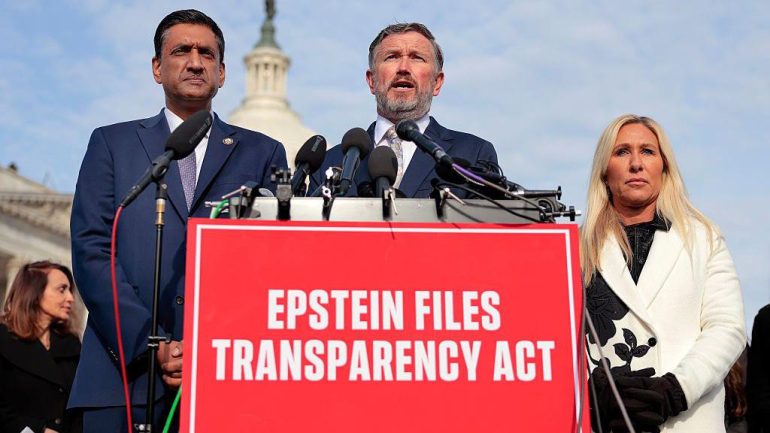
In a recent interview, Deputy Attorney General Todd Blanche strongly denied any efforts by the Department of Justice (DOJ) to protect President Donald Trump by redacting his name from documents related to convicted sex trafficker Jeffrey Epstein. As the DOJ began releasing thousands of files on December 19, 2025, to meet a legally mandated deadline, Blanche emphasized transparency while defending the process against accusations of favoritism and selective disclosure.
The release stems from the Epstein Files Transparency Act, a law signed by President Trump that required the DOJ to publicly share all unclassified records from its investigations into Epstein within 30 days. However, the initial batch was partial, with heavy redactions primarily to protect victim identities—over 1,200 victims and family members were identified for safeguarding. Blanche explained that full compliance on day one was impossible due to the massive volume of materials and the need to follow legal protections for survivors. He promised additional releases on a rolling basis in the coming weeks, involving dozens of career lawyers from the National Security Division.
Blanche directly addressed concerns about bias, stating there was “no effort” to withhold or redact information based on names like Donald J. Trump, Bill Clinton, or others associated with Epstein. “Assuming it’s consistent with the law, yes,” he said when asked if every mention of Trump would be released. He accused Democratic lawmakers of using selective leaks from Epstein’s estate to unfairly target Trump and reiterated that the president has supported full disclosure from the start.
The first tranche of files included photographs and documents, many featuring former President Bill Clinton in social settings with Epstein and his associate Ghislaine Maxwell. Some images showed Clinton with celebrities like Michael Jackson, but provided little new evidence of unknown accomplices. A spokesperson for Clinton criticized the DOJ for highlighting these “grainy 20-plus-year-old photos,” calling it an attempt to scapegoat rather than deliver real answers.
Critics from both parties expressed frustration. Some Democrats accused the administration of delaying and redacting to hide potentially embarrassing details, while others, including lawmakers who co-sponsored the bill, argued the partial release failed to fully comply with the law. Reports noted that Trump’s name and images appeared rarely in the initial documents, mostly in already-public photos, fueling speculation despite Blanche’s assurances.
Blanche also defended a controversial decision earlier in 2025 to transfer Ghislaine Maxwell, Epstein’s convicted accomplice serving a 20-year sentence, to a lower-security facility in Texas. He cited multiple threats to her life as the reason, insisting it followed standard Bureau of Prisons protocols and was not preferential treatment. White House officials denied any involvement by Trump in the move.
In the same interview, Blanche confirmed ongoing DOJ investigations into former FBI Director James Comey and New York Attorney General Letitia James, despite a federal judge dismissing earlier indictments in November 2025 due to an unlawfully appointed prosecutor. He described the probes as evidence-based and handled by career law enforcement, rejecting claims of political retribution.
The Epstein files saga continues to stir debate, with victims’ advocates and lawmakers calling for complete transparency. As more documents are expected soon, the process underscores tensions between legal obligations, victim privacy, and public demands for accountability in one of the most high-profile scandals involving powerful figures.