
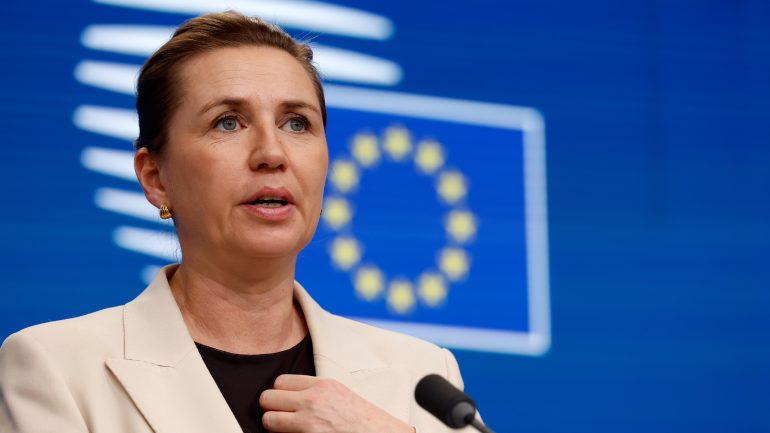
In a sharp escalation of tensions, Danish Prime Minister Mette Frederiksen stated on January 6, 2026, that any American attempt to take control of Greenland would effectively spell the end of the NATO alliance. Her remarks came in direct response to renewed statements from U.S. President Donald Trump, who has repeatedly expressed interest in bringing the strategic Arctic island under U.S. jurisdiction.
The controversy intensified following a U.S. military operation in Venezuela over the weekend, where American forces captured Venezuelan leader Nicolás Maduro and his wife in a surprise nighttime raid. This bold action raised alarms in Europe, particularly in Denmark, as Trump linked it to his ongoing push for Greenland. Trump has not ruled out using military force and recently told reporters, “let’s talk about Greenland in 20 days,” fueling fears of an imminent move.
Frederiksen told Danish broadcaster TV2 that Trump’s words “should be taken seriously.” She emphasized, “If the United States chooses to attack another NATO country militarily, then everything stops,” referring to the collapse of the alliance that has ensured Western security since World War II. “We will not accept a situation where we and Greenland are threatened in this way,” she added.
Greenland, a semiautonomous territory of Denmark with its own prime minister, is part of the Danish kingdom and thus protected under NATO’s collective defense pact. Greenland’s Prime Minister Jens-Frederik Nielsen also rejected Trump’s suggestions during a press conference in Nuuk on January 5. He stressed that Greenland “cannot be compared to Venezuela” and urged calm among residents, saying, “The situation is not such that the United States can simply conquer Greenland.” Nielsen called for continued cooperation rather than confrontation.
Trump has long viewed Greenland as vital for U.S. national security due to its location in the Arctic and rich mineral resources. On Sunday, he mocked Denmark’s defense efforts in the region, claiming the Danes had only added “one more dog sled” to Greenland’s arsenal. He argued that Russian and Chinese ships are active nearby, making U.S. control necessary. However, experts like Ulrik Pram Gad from the Danish Institute for International Studies have downplayed these threats, noting that such vessels are typically far from Greenland’s shores.
The U.S. already maintains a presence in Greenland through the Pituffik Space Base (formerly known as Thule Air Base) in the northwest, established under a 1951 agreement. The base supports missile warning and space surveillance for both the U.S. and NATO.
Additional controversy arose from a social media post by Katie Miller, a former Trump official, showing Greenland colored in American flag stripes with the caption “SOON.” Denmark’s ambassador to the U.S. responded firmly, demanding respect for Danish territorial integrity.
European leaders have shown solidarity with Denmark and Greenland amid the crisis. The situation highlights growing strains in transatlantic relations, as Trump’s aggressive stance contrasts with decades of close U.S.-Danish cooperation, including Denmark’s purchases of American F-35 jets and agreements allowing U.S. military access to Danish bases.
As fears mount over a potential “20-day timeline,” both Danish and Greenlandic leaders are urging de-escalation while standing firm against any threats to their sovereignty. The outcome could have profound implications for NATO and Arctic geopolitics.