
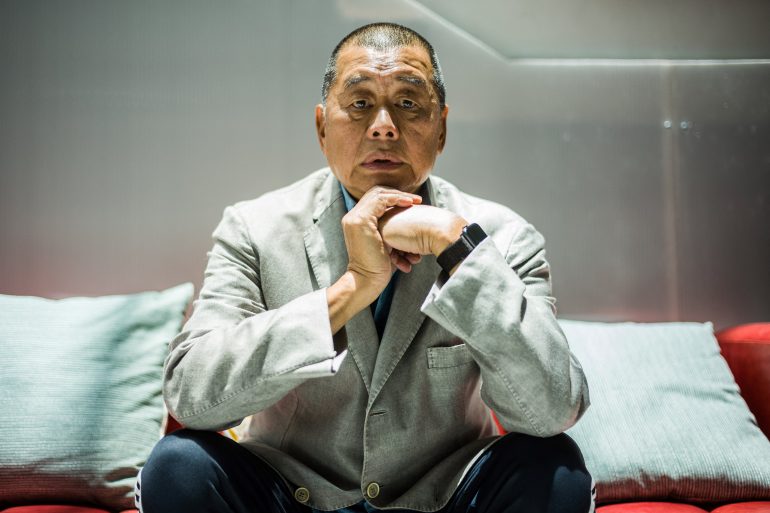
Jimmy Lai, the 78-year-old Hong Kong media tycoon and one of the city’s most prominent critics of Beijing, was sentenced to 20 years in prison on Monday—the harshest penalty ever handed down under the controversial national security law.
Lai, a British citizen, was convicted last December of colluding with foreign forces and conspiring to publish seditious material through his now-shuttered pro-democracy newspaper, Apple Daily. Prosecutors claimed he used the paper and his international contacts—including meetings with senior U.S. officials during the 2019 protests—to lobby for sanctions against China and Hong Kong. Lai has consistently denied the charges, insisting he was simply defending Hong Kong’s core values of free speech, rule of law, and democracy.
His son, Sebastien Lai, described the sentence as effectively a “death sentence,” citing his father’s advanced age and serious health deterioration after more than five years in solitary confinement. Sebastien told the BBC that Lai has heart issues, diabetes, hypertension, significant weight loss, and other worsening conditions, and that continued imprisonment could prove fatal.
The national security law, imposed by Beijing in 2020 in the wake of massive pro-democracy protests, has been used to arrest hundreds, shut down independent media outlets including Apple Daily, and reshape Hong Kong’s once-vibrant civil society. Rights groups have condemned Lai’s sentence as draconian, with the Committee to Protect Journalists calling it “the final nail in the coffin for freedom of the press in Hong Kong,” and Human Rights Watch warning it demonstrates Beijing’s determination to silence dissent.
Western governments have strongly criticized the ruling. UK Foreign Secretary Yvette Cooper urged Lai’s immediate release on humanitarian grounds, while Prime Minister Keir Starmer said he had raised the case directly with Chinese President Xi Jinping. In the United States, Secretary of State Marco Rubio called the sentence “unjust and tragic” and pushed for humanitarian parole. Australia, Japan, the European Union, and UN officials have also voiced concern.
Hong Kong and Chinese authorities, however, defended the verdict as lawful and necessary to protect national security and stability. Hong Kong’s leader described the outcome as “deeply gratifying,” and officials dismissed foreign criticism as interference in internal affairs.
Lai’s journey from a 12-year-old stowaway fleeing poverty in mainland China to a self-made billionaire and fearless activist has long symbolized Hong Kong’s unique blend of opportunity and defiance. After building a fortune through the Giordano clothing brand, he became a vocal supporter of democracy following the 1989 Tiananmen Square crackdown and used Apple Daily to challenge Beijing’s growing control.
On the day of sentencing, supporters gathered outside the heavily guarded courthouse, some having camped for days. Inside the courtroom, Lai smiled and waved to family and well-wishers as the verdict was read, while his wife and others struggled to hold back tears.
Alongside Lai, six former Apple Daily executives and staff received prison terms ranging from six to ten years, underscoring the deepening crackdown on independent journalism in the city. For many observers, the case marks a decisive chapter in the erosion of the freedoms that once defined Hong Kong.