
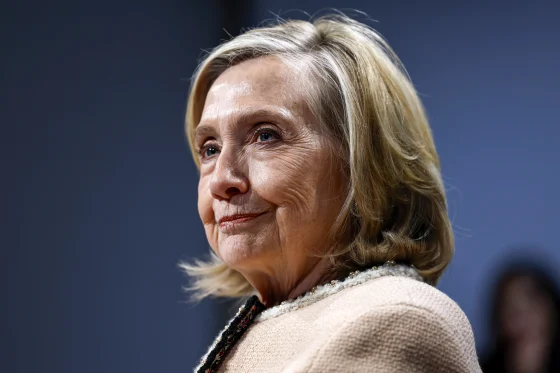
On February 26, 2026, former Secretary of State Hillary Clinton appeared before the U.S. House Oversight Committee in a closed-door deposition as part of its ongoing investigation into the crimes of the late sex offender Jeffrey Epstein. The hearing took place in Chappaqua, New York, near the Clintons’ home, marking a significant moment in a months-long congressional probe into Epstein’s network and the government’s handling of his case.
Hillary Clinton, along with her husband, former President Bill Clinton, had initially resisted the committee’s subpoena, calling it politically motivated “partisan theater” orchestrated by Republicans to target Democrats. They argued that they had already provided sworn statements covering their limited knowledge of Epstein. However, facing the threat of contempt-of-Congress proceedings, the couple agreed to testify. Hillary Clinton appeared on Thursday, with Bill Clinton scheduled for Friday.
In her opening statement, shared on social media, Hillary Clinton firmly denied any knowledge of Epstein’s or Ghislaine Maxwell’s criminal activities. “I had no idea about their criminal activities. I do not recall ever encountering Mr. Epstein,” she said. She emphasized that she had been horrified by the revelations about their crimes, like many others, and highlighted her own long-standing work combating human trafficking. As secretary of state, she had led efforts including the Trafficking Victims Protection Act and annual global reports on the issue.
Clinton acknowledged limited interactions with Maxwell, Epstein’s associate and convicted accomplice, noting that Maxwell had attended a few Clinton Foundation events and their daughter Chelsea’s 2010 wedding. She reiterated that her husband had flown on Epstein’s plane for charitable purposes years ago but cut ties long before Epstein’s crimes became public. Bill Clinton has previously expressed regret over any association with Epstein and denied any wrongdoing or awareness of his illegal activities.
The deposition occurred behind closed doors and was recorded, following negotiations that included the Clintons pushing for a public format to prevent selective leaks—though it remained private. Committee Chairman Rep. James Comer (R-Ky.) described the effort as bipartisan, aimed at understanding how Epstein amassed wealth and surrounded himself with powerful figures. He stressed that “no one is above the law.” Comer noted the investigation’s focus on broader issues, such as why earlier administrations did not pursue further charges against Epstein after his 2008 Florida plea deal.
The probe has drawn attention due to Epstein’s connections to high-profile individuals, including mentions in recently released Department of Justice files. These documents, released under pressure during the current administration, include references to both Bill Clinton and President Donald Trump from their past associations with Epstein—though appearing in the files does not indicate wrongdoing. Trump has denied any involvement in Epstein’s crimes and expressed regret over the Clintons being compelled to testify.
During her testimony, Hillary Clinton criticized the committee’s approach, accusing Republicans of a one-sided investigation that protects certain figures while ignoring others. She called for President Trump to testify under oath if the panel were serious about uncovering the full truth, pointing to his mentions in the Epstein files. Democrats on the committee, including Rep. Robert Garcia, echoed this call, arguing that Bill Clinton’s appearance sets a precedent that should apply equally.
The hearings represent a rare instance of high-level former officials facing congressional questioning in this context. Bill Clinton’s session on Friday will be notable as the first time a former U.S. president has testified before a congressional panel since Gerald Ford in 1983.
The Epstein case continues to fuel public interest and debate, with survivors’ voices and demands for accountability remaining central. Committee members from both parties are expected to speak to reporters following the sessions, though details of the testimony may emerge gradually as transcripts or summaries are potentially released.