
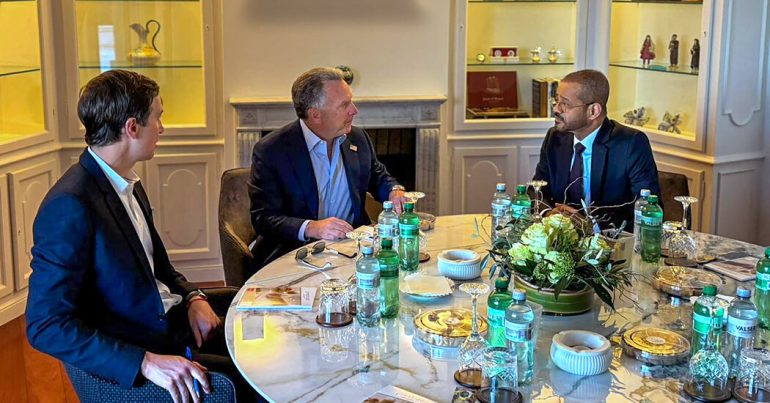
On February 26, 2026, U.S. and Iranian officials wrapped up a key round of negotiations in Geneva, Switzerland, with Oman acting as the mediator. Omani Foreign Minister Badr al-Busaidi announced that the talks had achieved significant progress in addressing Iran’s nuclear program. The discussions took place at the Omani diplomatic residence, and both sides agreed to continue with technical-level meetings in Vienna next week after consulting their governments.
The stakes remain high as the Middle East faces the threat of war. President Donald Trump has positioned a large U.S. military force in the region, signaling readiness for action if diplomacy fails. Trump has stated that his top choice is a negotiated deal, but he will not permit Iran to develop a nuclear weapon. He recently claimed Iran is attempting to restart its nuclear activities, even after U.S. strikes in June reportedly damaged key facilities.
The U.S. delegation arrived with firm demands, according to reports from sources like The Wall Street Journal. These include requiring Iran to dismantle its primary nuclear sites at Fordow, Natanz, and Isfahan; transferring all remaining enriched uranium to the United States; and agreeing to a deal with no expiration date or “sunset” clauses. This contrasts sharply with the 2015 nuclear agreement (known as the JCPOA), which Trump withdrew from in 2018. Critics of that deal argued its limits on Iran’s program would eventually fade.
Iran insists its nuclear program serves only peaceful purposes, such as energy and medical needs, and views uranium enrichment as a sovereign right. Tehran rejects calls to abandon enrichment entirely. Some proposed compromises would allow Iran to enrich uranium to low levels—around 1.5 percent—compared to its current stockpile enriched to 60 percent. Other ideas include permitting enrichment strictly for medical isotopes under strict oversight.
Secretary of State Marco Rubio emphasized that the Geneva talks centered mainly on the nuclear issue, though he highlighted concerns about Iran’s ballistic missile program as a separate but serious threat to the U.S. and its allies. Beyond the nuclear file, Trump has criticized Iran’s human rights record, including its violent crackdown on protests from December to January that killed thousands, as well as its backing of groups like Hezbollah in Lebanon and Hamas in Gaza. The U.S. also holds Iran responsible for attacks that killed American service members.
In Washington, lawmakers are responding to the risk of escalation. A bipartisan group, including Sen. Tim Kaine (D-Va.), is pushing a war powers resolution that would require congressional approval before any military action against Iran, except in cases of self-defense or imminent threats. Kaine spoke on the Senate floor, calling a war with Iran “unnecessary and dangerous” and urging colleagues to avoid another prolonged Middle East conflict. He questioned whether the nation has learned from two decades of war in the region. A vote on the resolution is expected soon.
While both sides describe the Geneva session as productive—marking one of the more serious exchanges in recent rounds—no final agreement emerged. Differences persist over enrichment levels, sanctions relief, missile capabilities, and verification measures. Iran seeks major sanctions relief in exchange for concessions, while the U.S. has offered limited relief so far.
As technical talks loom in Vienna, the coming weeks will test whether diplomacy can prevail over military options. The outcome could shape U.S.-Iran relations and regional stability for years to come.