
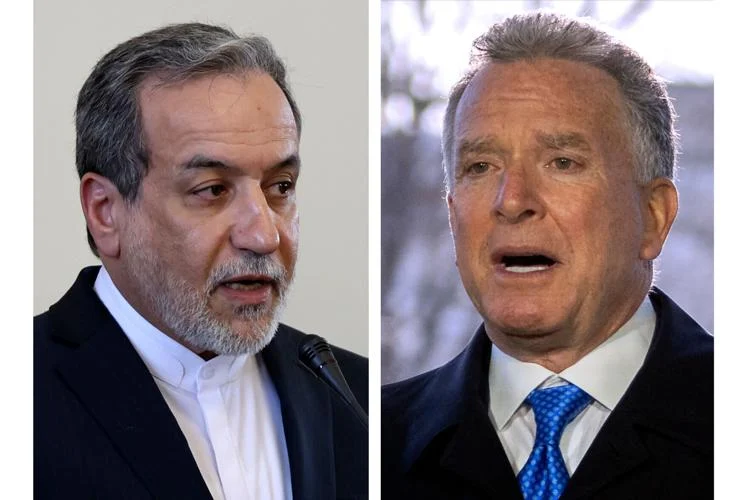
On February 6, 2026, senior officials from the United States and Iran met for indirect talks in Muscat, the capital of Oman. These discussions, mediated by Oman’s Foreign Minister Badr Albusaidi, marked the first direct engagement between the two countries since a major conflict involving US and Israeli strikes on Iranian nuclear sites in June 2025. Iran’s Foreign Minister Abbas Araghchi described the talks as a “good beginning” and said they focused exclusively on Iran’s nuclear program.
The negotiations took place against a backdrop of serious tension. In recent weeks, the US has built up its military presence in the Middle East, sending thousands of troops, an aircraft carrier, warships, and fighter jets to the region. President Donald Trump has repeatedly threatened military action, including bombing Iran, if no deal is reached. Iran has responded by vowing to strike back forcefully against US forces or Israel if attacked.
The talks were indirect, meaning the two sides did not meet face-to-face. Instead, Omani officials shuttled between the delegations. The US team was led by special envoy Steve Witkoff and included Jared Kushner, Trump’s son-in-law. Iran’s delegation was headed by Foreign Minister Araghchi.
Araghchi spoke to Iranian state television after the meetings ended. He called the discussions a “very good start” in a “positive atmosphere” but emphasized that they were limited to nuclear issues. He said both sides agreed to continue negotiations, though details on timing and next steps would be decided after consultations in Tehran and Washington. He also highlighted an “atmosphere of mistrust” that needs to be overcome for progress.
Oman’s Foreign Minister Albusaidi posted on social media that the talks were “useful” in clarifying each side’s views and identifying possible areas for progress. He expressed hope that the parties would reconvene soon.
The US has not issued an immediate official reaction to the day’s events. However, US officials had previously said they wanted discussions to cover more than just the nuclear program, including Iran’s ballistic missile development and its support for regional armed groups like Hezbollah in Lebanon, militias in Iraq, the Houthis in Yemen, and Hamas in Gaza—part of what Iran calls its “Axis of Resistance.” Iran has rejected these topics as violations of its sovereignty and insisted on keeping the focus narrow.
Iran’s nuclear program has long been a source of conflict. Tehran insists it is for peaceful purposes, such as energy and medical uses, while the US and Israel accuse Iran of pursuing nuclear weapons. The 2015 nuclear deal, which limited Iran’s program in exchange for sanctions relief, collapsed after Trump withdrew from it in 2018. Recent events, including US bombing of Iranian nuclear facilities last year, have heightened fears of escalation.
The talks come at a fragile moment for Iran’s leadership. Nationwide anti-government protests last month, sparked by a severe economic crisis worsened by sanctions, led to a brutal crackdown by security forces. Human rights groups report thousands killed and tens of thousands arrested. Analysts suggest Iran’s regime is in one of its weakest positions since the 1979 Islamic Revolution and may be open to concessions on the nuclear issue to avoid further military pressure and gain sanctions relief.
Experts note that Iran has signaled willingness for painful compromises, such as suspending uranium enrichment for a period, creating a regional consortium for enrichment, or transferring its stockpile of highly enriched uranium to a third country. In return, Iran demands the lifting of crippling economic sanctions.
For the US, successful talks could provide an off-ramp from military threats. Regional countries worry that a US strike might spark a wider war or long-term instability in Iran without necessarily toppling the regime.
While the day ended on a cautiously optimistic note, major differences remain. The US push for broader discussions and Iran’s firm red lines on missiles and proxies could make a comprehensive deal difficult. Both sides now return home to consult with their leaders, leaving the path forward uncertain but with diplomacy still alive for now.