
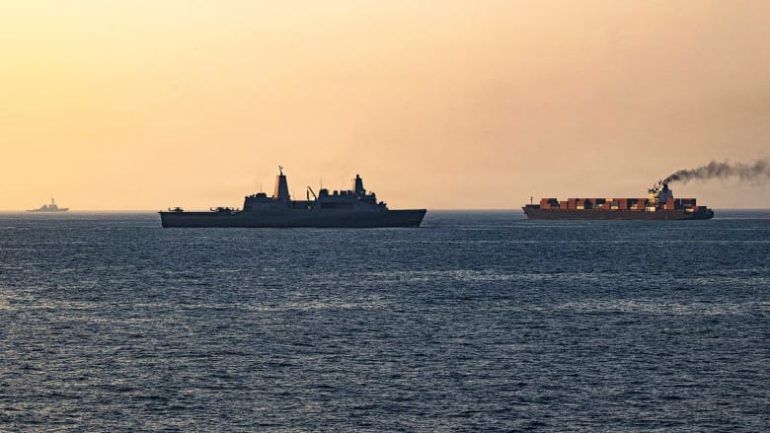
Tensions between the United States and Iran have sharply escalated, turning the strategically vital Strait of Hormuz into a dangerous flashpoint that is now disrupting global trade and energy supplies. As both nations tighten their grip on the narrow shipping lane, the standoff is raising fears of a prolonged conflict with far-reaching economic consequences.
President Donald Trump ordered the U.S. Navy to “shoot and kill” any Iranian boats caught laying mines in the strait, signaling a more aggressive military posture. He also directed a major expansion of mine-clearing operations, aiming to reopen the waterway after it was effectively shut down by escalating hostilities. The move comes as Iran has seized multiple cargo ships and launched attacks on commercial vessels, further destabilizing maritime traffic.
The Strait of Hormuz is one of the world’s most critical oil transit routes, and its closure is already sending shockwaves through the global economy. Energy supplies have been severely disrupted, with millions of barrels of oil taken off the market. Rising fuel costs are beginning to hit consumers, with U.S. gas prices climbing again after weeks of decline.
Despite mounting pressure, Trump has indicated there is no urgency to end the conflict. He stated that while the U.S. has “all the time in the world,” Iran does not, emphasizing that any agreement will come only under favorable terms. Meanwhile, Iran has blamed U.S. naval actions for blocking progress in peace negotiations.
Beyond the naval standoff, the broader regional conflict continues to intensify. Fighting linked to Israel and Iran-backed forces has resulted in thousands of deaths across multiple countries, including Iran, Lebanon, and Israel. In Lebanon, civilians displaced by ongoing strikes are struggling to survive, with refugee centers housing hundreds, many of them children.
Diplomatic efforts are still underway. Representatives from Israel and Lebanon are set to meet at the White House in a rare round of direct talks aimed at extending a fragile ceasefire. U.S. officials, including Secretary of State Marco Rubio, are expected to participate, though ongoing violence threatens to undermine progress.
International leaders are urging coordinated action to reopen the Strait of Hormuz and stabilize global markets. European defense officials have expressed cautious optimism that multinational cooperation could help ease the blockade. However, with both military and economic pressures intensifying, the path forward remains uncertain.
As the standoff drags on, experts warn that the ripple effects could deepen, potentially pushing millions more into poverty due to rising energy costs, food shortages, and supply chain disruptions. Even if the conflict were to end soon, the long-term damage to global stability may already be set in motion.
New Title: Trump Orders ‘Shoot and Kill’ Response as Strait of Hormuz Crisis Deepens
Tensions between the United States and Iran have escalated dramatically, with the strategically vital Strait of Hormuz now at the center of a growing military and economic crisis. The narrow passage, critical for global oil shipments, has effectively ground to a halt as both nations ramp up aggressive actions.
President Donald Trump is now ordering the U.S. military to “shoot and kill” any Iranian boats caught laying mines in the strait, marking a significant escalation in rules of engagement. Alongside this directive, he has ordered a major increase in mine-clearing operations as the U.S. attempts to reopen one of the world’s most important trade routes.
The confrontation intensified after Iran seized multiple cargo ships and carried out attacks on commercial vessels in the region. In response, U.S. forces have boarded tankers suspected of involvement in Iranian oil smuggling, further tightening control over maritime activity. Iran has accused the U.S. of creating a blockade that is preventing progress in peace negotiations.
The economic fallout is already spreading. The Strait of Hormuz handles a significant portion of the world’s oil supply, and disruptions have driven energy prices higher. Gas prices in the United States have begun rising again, reflecting the strain on global supply chains. Analysts warn that continued instability could trigger a broader energy crisis.
Despite the mounting pressure, Trump has signaled he is in no rush to resolve the conflict, stating that the U.S. has “all the time in the world” while suggesting Iran is under increasing strain. His comments highlight a strategy focused on leverage rather than speed in negotiations.
Meanwhile, the wider regional conflict continues to take a heavy human toll. Thousands have been killed across Iran, Lebanon, Israel, and surrounding areas since fighting intensified earlier this year. Civilians, particularly in Lebanon, are facing displacement and worsening humanitarian conditions as violence persists.
Diplomatic efforts are still in motion. U.S.-hosted talks between Israel and Lebanon are expected to take place at the White House, with officials hoping to extend a fragile ceasefire. Secretary of State Marco Rubio is set to participate, though ongoing clashes threaten to derail progress.
Global leaders are urging coordinated action to reopen the strait and stabilize markets, but uncertainty remains high. As the standoff continues, experts warn that the long-term consequences could include widespread economic disruption, increased poverty, and lasting damage to global trade systems.