
The 14th Amendment to the U.S. Constitution, ratified in 1868 after the Civil War, includes a clear statement on citizenship: “All persons born or naturalized in the United States, and subject to the jurisdiction thereof, are citizens of the United States.” For more than a century, this clause has generally been understood to grant automatic citizenship to nearly everyone born on American soil, with narrow exceptions such as children of foreign diplomats or invading forces.
Now, President Donald Trump’s administration is seeking to narrow that long-standing interpretation. On his first day in his second term, Trump issued an executive order that would limit birthright citizenship. Under the order, automatic citizenship at birth would apply only to children who have at least one parent who is either a U.S. citizen or a legal permanent resident. The order has been blocked by lower courts, and the Supreme Court is scheduled to hear arguments in the case this week.
In defending the policy, the administration points to an 1884 Supreme Court decision known as Elk v. Wilkins. That case involved John Elk, a man believed to be from what is now the Winnebago Tribe of Nebraska. In 1880, an election official in Omaha, Nebraska, named Charles Wilkins refused to let Elk register to vote, arguing that as a Native American, he was not a U.S. citizen.
Elk had left his tribe, cut all ties with it, and lived among other residents of the state. He claimed he had fully subjected himself to U.S. authority and should therefore be considered a citizen by birth, since he was born within U.S. territory. The Supreme Court ruled against him. The justices held that Native Americans born into recognized tribes were not automatically citizens under the 14th Amendment. They compared their status at birth to that of “the children of subjects of any foreign government born within the domain of that government.” In the Court’s view, members of tribes owed primary allegiance to their tribal nations, which were treated as quasi-sovereign entities.
Solicitor General D. John Sauer, arguing for the government, has cited Elk v. Wilkins in court filings. He contends the ruling shows that simply being born on U.S. soil is not enough for citizenship if a person is not fully “subject to the jurisdiction” of the United States in a political sense. The administration argues this supports limiting citizenship for children of parents who are in the country illegally or on temporary visas.
A White House spokeswoman described the case as an opportunity for the Supreme Court to return the meaning of citizenship to its original understanding.
Legal experts on Native American law, however, say the Elk decision is being applied too broadly. They emphasize that the ruling addressed a very specific situation involving the unique legal and political status of Native tribes. Tribes were (and in many ways still are) considered separate sovereign nations with their own governments, even while living within U.S. borders. This “quasi-sovereign” relationship created a different kind of jurisdiction that does not easily compare to the situation of immigrants or their children.
Scholars such as Bethany Berger of the University of Iowa and Gregory Ablavsky of Stanford Law School have filed a brief supporting those challenging the executive order. They argue that Indian law is complex and anomalous — meaning it does not provide a straightforward model for other areas of citizenship law. Leonard Fineday, general counsel for the National Congress of American Indians, called the administration’s use of Elk a misreading of the case, noting it rests entirely on the distinct nature of tribal governments.
Monte Mills, director of the Native American Law Center at the University of Washington, described the reliance on the ruling as ironic, given the historical mistreatment of Native peoples and the nuanced way U.S. law has treated tribes. Native American tribes themselves have not filed briefs in the current case. Since Congress granted them citizenship through a 1924 statute, they have no direct stake in the outcome. Tribes also hold a wide range of political views, and some may support stricter immigration policies.
The debate also involves another key 19th-century case. In 1898, the Supreme Court decided United States v. Wong Kim Ark. That ruling involved a man born in San Francisco to Chinese immigrant parents who were not U.S. citizens. The Court held that he was a citizen at birth under the 14th Amendment. Justice Horace Gray, who wrote the majority opinion in both Elk and Wong Kim Ark, made clear that the earlier decision applied only to members of Indian tribes and did not affect the citizenship of children born in the United States to non-Native immigrant parents.
The Trump administration argues that Wong Kim Ark should be read narrowly, applying mainly to children of permanent residents rather than those whose parents lack legal permanent status. Supporters of the traditional view of birthright citizenship counter that the case helps confirm a broader understanding of the 14th Amendment’s citizenship clause.
The current dispute centers on the phrase “subject to the jurisdiction thereof.” The administration interprets this to exclude children whose parents do not owe full political allegiance to the United States because of their immigration status. Challengers, including the American Civil Liberties Union, say the phrase has long been understood to cover almost everyone born here except in very limited cases like diplomats. They argue that trying to import principles from Native American law into general immigration policy overlooks important differences.
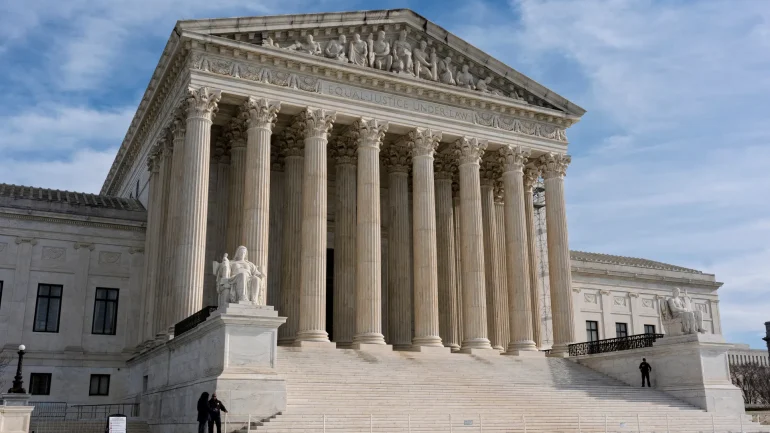
As the Supreme Court prepares to hear arguments, the case raises fundamental questions about how to read the Constitution’s citizenship provision more than 150 years after it was written. The Elk v. Wilkins decision offers one historical lens focused on the distinct status of tribes, while Wong Kim Ark provides another focused on children of immigrants. How the justices weigh these precedents could shape who qualifies as a U.S. citizen by birth for generations to come.
The executive order remains on hold while the legal process continues. Whatever the Court decides, the ruling will likely clarify — or redefine — the scope of one of the most important protections in the Constitution.