
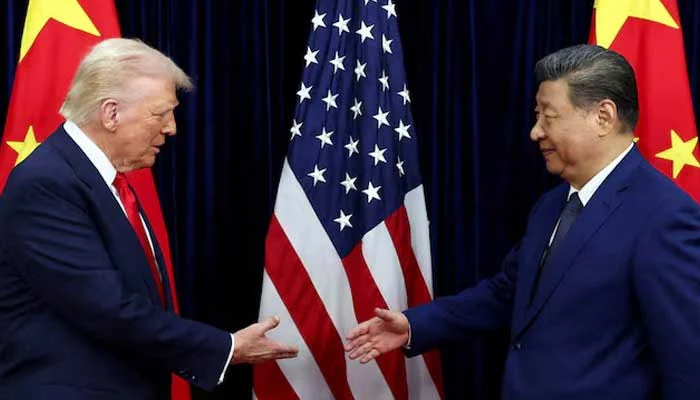
Tensions in the Middle East remain high as President Donald Trump arrived in China on Wednesday for talks with President Xi Jinping, while Iran warned it is prepared to respond to any new American military action.
Before landing in China, Trump told reporters he expected a “long talk” with Xi about the ongoing Iran conflict, which has now stretched to 75 days and rattled the global economy. Despite the meeting, Trump said the United States does not need Beijing’s help to resolve the crisis.
At the same time, Iranian military leaders said new drills conducted in Tehran showed the country is ready to confront another U.S. attack “at any place and at any time.” Diplomatic efforts to negotiate peace appear to have stalled, raising fears of a prolonged conflict.
The financial cost of the war is also growing. Acting Pentagon comptroller Jules Hurst told lawmakers Tuesday that the conflict has already cost U.S. taxpayers $29 billion. That number is higher than the $25 billion estimate Defense Secretary Pete Hegseth gave last month, though some officials have suggested the real total could already be closer to $50 billion.
Meanwhile, the U.S. Senate rejected another Democratic-led effort to limit Trump’s military authority in Iran. The measure failed by a narrow 49-50 vote. Republican Senators Rand Paul, Susan Collins, and Lisa Murkowski joined most Democrats in support, while Democratic Senator John Fetterman voted against it. Murkowski said she changed her position because the administration had not provided enough clarity about the military operation after a key 60-day deadline passed.
Elsewhere in the region, Israeli Prime Minister Benjamin Netanyahu secretly traveled to the United Arab Emirates for talks with President Mohammed bin Zayed Al Nahyan. Netanyahu’s office later described the meeting as a “historic breakthrough” in relations between the two countries.
Iran also accused Kuwait of attacking an Iranian vessel near an island allegedly used by U.S. forces and detaining four Iranian nationals. Iranian Foreign Minister Abbas Araghchi called the move unlawful and warned Tehran reserves the right to respond.
The conflict is also disrupting global energy markets. The International Energy Agency said countries are draining emergency oil reserves at a record pace because of severe supply disruptions tied to the fighting and the effective closure of the strategically critical Strait of Hormuz. The agency warned shrinking reserves could trigger future price spikes.
European officials are also worried about aviation fuel shortages. EU Energy Commissioner Dan Jørgensen said there is no immediate shortage, but longer-term risks are increasing as airlines cancel flights and fuel prices continue to surge.
The U.S. military said its blockade of Iranian ports remains active. American forces have redirected 67 commercial vessels and disabled four others while allowing 15 humanitarian aid ships to pass.
Violence has also escalated in Lebanon, where Israeli drone strikes hit several vehicles Wednesday, killing 12 people, including two children, according to Lebanese health officials. Israel said it targeted Hezbollah infrastructure as fighting continues despite a U.S.-brokered ceasefire reached in April.
The United Nations peacekeeping mission in Lebanon, UNIFIL, warned it is increasingly concerned about clashes between Israeli forces and Hezbollah near its bases, saying recent drone explosions have damaged buildings and put peacekeepers at serious risk.
With peace talks stalled, military operations expanding, and economic pressure mounting worldwide, the conflict appears far from resolution as Trump and Xi begin high-stakes discussions in Beijing.