
A tense day in the Middle East ended with signs of de-escalation after fears grew that fighting between Israel, Iran, and Hezbollah could spiral into a larger regional war.
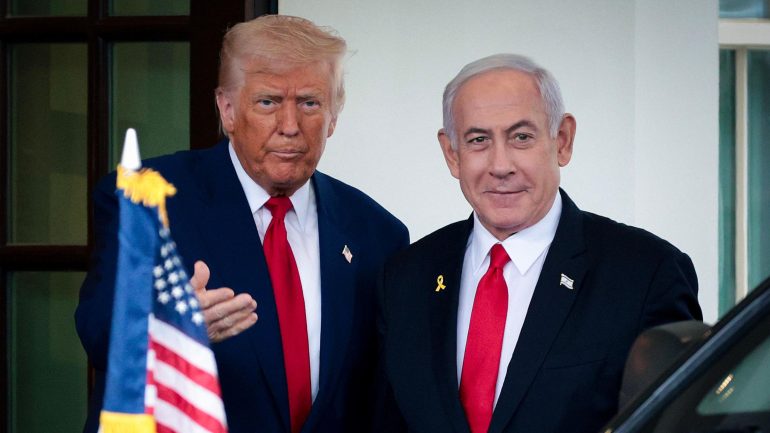
President Donald Trump announced Monday that Israel and Hezbollah had agreed to stop attacking each other, claiming he had spoken directly with Israeli Prime Minister Benjamin Netanyahu and indirectly with Hezbollah representatives. Trump wrote on social media that “Israel will not attack them, and they will not attack Israel.”
However, Netanyahu later appeared to distance himself from the idea of a formal cease-fire. While he did not mention any new agreement, he indicated that Israel would temporarily hold off on a threatened strike against Beirut’s southern suburbs, a stronghold of the Iran-backed Hezbollah movement.
“I spoke with President Trump tonight and told him that if Hezbollah doesn’t cease its attacks on our cities and civilians, Israel will strike terror targets in Beirut,” Netanyahu said. “This position of ours remains.”
The developments followed a day of mounting tensions that had raised concerns about the future of fragile peace talks between the United States and Iran.
Beirut Braces for Attack
Earlier Monday, Netanyahu ordered the Israeli military to prepare strikes against Dahiya, the southern suburbs of Beirut. The area is considered a major Hezbollah stronghold and has been largely spared from major Israeli attacks since a cease-fire took effect in April.
The warning sparked panic among residents. Thousands fled their homes, creating massive traffic jams throughout the Lebanese capital.
Many residents described the evacuation as yet another chapter in years of recurring conflict.
“I lost count of how many times I’ve evacuated,” said Zahra Khomasi, a Beirut resident who fled with her children after the warning.
Despite the threats, no Israeli strike on Beirut materialized by the end of the day.
Iran Issues Warning
As Israel considered expanding operations in Lebanon, Iran increased pressure on both Washington and Jerusalem.
According to Iranian officials, Tehran warned through intermediaries that it would suspend negotiations with the United States if Israel attacked Beirut. Iran has repeatedly argued that any cease-fire agreement must include an end to fighting involving its regional allies, including Hezbollah.
Iran’s military also issued a warning directed at northern Israel, saying residents should evacuate if Israeli forces attacked Beirut. Although Iran did not explicitly threaten direct action, the message underscored the risk of wider conflict.
The tensions came as the United States and Iran exchanged military blows elsewhere in the region. U.S. forces reported intercepting two Iranian ballistic missiles aimed at American troops in Kuwait, while Washington said it had conducted strikes against military targets inside Iran over the weekend.
Hezbollah Signals Openness to Truce
Amid the escalating rhetoric, Hezbollah appeared willing to consider a new cease-fire.
Nabih Berri, the speaker of Lebanon’s parliament and a key intermediary between Hezbollah and the United States, said the group was ready to accept a “real cease-fire” if serious guarantees were provided.
“If there is a serious cease-fire, I guarantee Hezbollah will be committed to it,” Berri said.
The Lebanese government later stated that it had received confirmation that Hezbollah had agreed to a U.S.-backed proposal calling for a mutual halt to attacks.
The proposal reportedly calls for Hezbollah to stop attacks on Israel, while Israel would refrain from expanding military operations around Beirut.
U.N. Calls for Restraint
The growing crisis prompted an emergency meeting of the United Nations Security Council.
Most council members, including France, Britain, Russia, and China, urged Israel to withdraw forces from southern Lebanon and avoid further escalation. Diplomats warned that additional military action could undermine efforts to reach lasting peace in the region.
French Ambassador Jérôme Bonnafont criticized Israel’s actions, calling them a “major strategic mistake,” while Britain’s deputy ambassador James Kariuki described the military escalation as “reckless and disproportionate.”
The United States took a different approach, focusing criticism on Iran and Hezbollah rather than Israel.
Markets React to Uncertainty
Financial markets were rattled by reports that Iran might suspend negotiations with the United States.
Oil prices surged as investors feared disruptions to global energy supplies. Brent crude oil rose more than 4 percent to nearly $95 per barrel, while West Texas Intermediate crude climbed above $92 per barrel.
The spike reflected growing concern that a collapse in diplomacy could threaten shipping routes in the Persian Gulf and further destabilize global energy markets.
Trump Balances Diplomacy and Pressure
Throughout the day, Trump attempted to project confidence that negotiations with Iran remained on track despite reports of growing friction.
At one point, he dismissed suggestions that the talks were in danger, saying negotiations were continuing “at a rapid pace.” Later, however, he appeared frustrated by the slow progress, telling CNBC that the process was becoming “very boring.”
Despite those comments, the administration remains under pressure to prevent a broader regional conflict. Rising fuel prices and public opposition to the war have increased the political stakes for the White House.
For now, both Israel and Iran appear to have stepped back from immediate escalation. But with fighting continuing in southern Lebanon, negotiations with Iran still unresolved, and mutual threats lingering, the region remains on edge as diplomats race to prevent another outbreak of war.