
The United States and Iran both claim that a monthlong cease-fire is holding in the Middle East, even after a week of sharp exchanges of fire. However, the two sides have made little progress toward a lasting peace agreement, leaving the region tense and unstable.
As of Saturday, May 9, 2026, negotiations to end more than two months of conflict had not produced a breakthrough. Both countries say the truce is still in effect, but recent violence shows how fragile it is. President Trump said on Friday that he expected to hear from Iranian officials, but it was not clear by Saturday morning whether that contact had taken place.
Tensions in the Strait of Hormuz
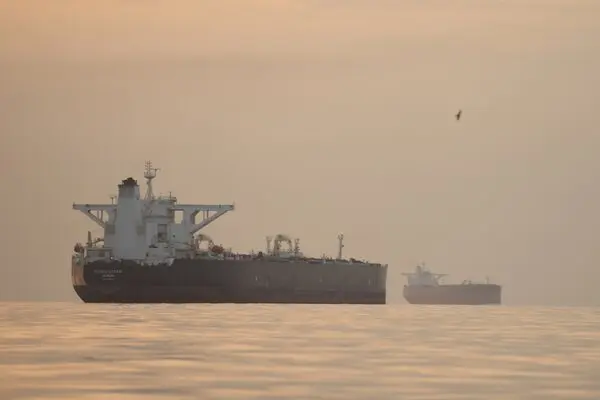
Much of the latest fighting has centered on the Strait of Hormuz, a narrow waterway that is critical for global oil and gas shipments. Iran has kept the strait largely closed since the war began, while the United States has blockaded Iranian ports in response. These competing blockades have trapped about 1,600 ships in the Persian Gulf and driven up energy prices worldwide.
On Friday, the U.S. military fired on two Iranian-flagged oil tankers, disabling them as they tried to reach an Iranian port. Earlier in the week, U.S. forces struck Iranian military sites along the coast after American ships came under fire. Iran has threatened a “heavy assault” on American targets if its vessels are attacked again.
Ship tracking data shows that traffic through the strait has dropped sharply. While a few cargo ships have passed through recently, no tankers have made it. One Qatar-owned gas tanker was attempting to cross on Saturday, but its success was uncertain. In normal times, around 130 vessels carrying one-fifth of the world’s oil supply use the strait each day.
Britain announced on Saturday that it was sending a destroyer to the Middle East as “pre-positioning” for future efforts to secure the waterway. Britain and France have discussed forming a multinational coalition to keep the strait open once the conflict ends, but details remain limited.
Environmental and Economic Strain
Satellite images reveal a large oil slick spreading in the Persian Gulf off Iran’s Kharg Island, the country’s main crude oil export terminal. The spill covered more than 20 square miles and may have released over 3,000 barrels of oil. Experts say the U.S. blockade, combined with damage from attacks and limited storage space, has put heavy pressure on Iran’s aging oil infrastructure. The exact cause of the spill is still unclear, but it highlights the environmental risks of the prolonged conflict.
Fighting Continues in Lebanon
The cease-fire between Israel and Hezbollah, the Iran-backed militant group, is also under strain. On Saturday, Israel carried out strikes across southern Lebanon, killing at least seven people, including a child, in one attack. Israeli forces said they targeted Hezbollah military sites and weapons storage. Hezbollah responded with rockets and drones, injuring Israeli soldiers.
The violence has increased in recent days, including an Israeli strike near Beirut earlier in the week—the first such attack since the truce began. Both sides accuse the other of violations, and the fighting has already killed more than 2,700 people in Lebanon. Israeli and Lebanese envoys are scheduled to meet next week in Washington for U.S.-brokered talks aimed at strengthening the fragile truce.
Broader Pressure on Iran
The Trump administration continues to apply economic pressure. On Friday, the United States announced new sanctions targeting networks in China, Hong Kong, Belarus, and the United Arab Emirates that supply Iran’s missile and drone programs. These measures aim to weaken Iran’s military and push Tehran to reopen the Strait of Hormuz.
In addition, Bahrain announced the arrest of 41 people accused of links to Iran’s Revolutionary Guard Corps and espionage.
Uncertain Path Forward
Despite the cease-fire, deep disagreements remain. The U.S. wants strict limits on Iran’s nuclear program, while Iran resists those demands. The recent violence in the Gulf and Lebanon shows how quickly the fragile truce could unravel. For now, the region remains in an uneasy limbo, with global energy markets and local populations bearing the cost of the ongoing standoff.
A lasting peace still appears distant as both sides continue to maneuver for advantage.