
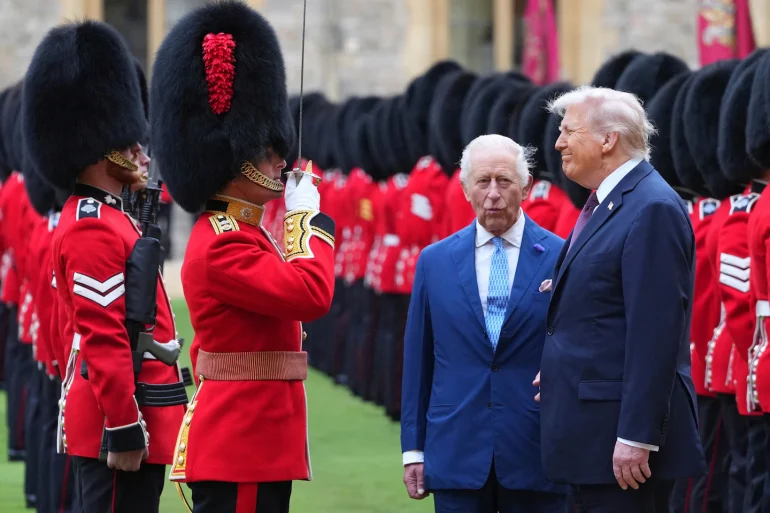
The pageantry of a royal state visit begins today in Washington, D.C., as King Charles III and Queen Camilla arrive for a four-day trip hosted by President Donald Trump. The visit comes at a tense time, marked by heightened security concerns following a shooting at the White House Correspondents’ Dinner and a growing rift between the U.S. and U.K. over the ongoing war with Iran. British officials hope the president’s well-known love of ceremony and the king’s calm, neutral demeanor can help repair strains in the longtime alliance.
The trip was planned long ago to celebrate 250 years since the Declaration of Independence and to highlight the enduring “special relationship” between the two nations. Instead, it arrives amid one of the sharpest disagreements in recent decades. Tensions escalated after the U.S. launched military action against Iran in late February 2026. The U.K. initially refused to allow American planes to use British bases for the strikes, citing legal limits on preemptive action. British leaders later provided some support once Iran responded, but the early hesitation angered Trump.
Trump has publicly criticized Prime Minister Keir Starmer, saying Britain is no longer the reliable “Rolls-Royce of allies” and comparing Starmer unfavorably to Winston Churchill. In contrast, the president has spoken warmly about King Charles, calling him a friend and expressing excitement about the upcoming dinner and meetings. “We’ve spoken and we’re going to have a great time,” Trump said recently.
The visit proceeds despite fresh security worries. On Saturday, gunshots rang out at the White House Correspondents’ Dinner in Washington, forcing the evacuation of Trump, members of his Cabinet, and hundreds of attendees. Buckingham Palace confirmed on Sunday that the king and queen would go ahead with the trip as planned. “The King and Queen are most grateful to all those who have worked at pace to ensure this remains the case,” the palace statement read.
British officials see the monarch as a valuable bridge. Unlike elected politicians, the king stays above party politics and rarely speaks on controversial issues. His reserved style—often described as a strong “poker face”—could help smooth over differences without making them worse. The schedule includes a private meeting with the Trumps, a garden party at the British ambassador’s residence, a formal state dinner at the White House, and an address by the king to a joint session of Congress—the second time a British monarch has done so.
For the U.K., the stakes are high. Many in Britain oppose the Iran war, which has driven up energy prices and contributed to economic troubles at home. Public opinion polls show limited support for deeper involvement, and some critics argue the visit gives Trump an unnecessary diplomatic win. Liberal Democrat leader Ed Davey called it a sign of Starmer’s “lack of backbone,” and a YouGov survey found nearly half of Britons favored canceling the trip.
Yet government insiders say skipping the visit would damage relations even more. “Not going would be far worse,” one official noted. They point out that personal rapport matters to Trump, who values grand displays of respect and has long admired British royalty. Past visits, including Trump’s time at Windsor Castle, showed how ceremony can build goodwill.
The strain between Trump and Starmer marks a sharp turn. Earlier in Trump’s second term, the two leaders managed differences carefully. Britain even secured a favorable trade deal that eased the impact of U.S. tariffs on Europe. That cooperation has now frayed over Iran, leaving British policymakers frustrated by rising costs and uncertain about the war’s direction.
Broader questions linger in the U.K. about its role alongside the United States. Some experts, including former Trump adviser Fiona Hill, suggest the relationship sometimes feels unbalanced, with Britain’s military geared more toward supporting U.S. operations than purely British interests. Still, many recognize that the alliance remains vital for security and trade.
The king must also navigate personal challenges during the trip. His brother, Prince Andrew, faces ongoing scrutiny tied to the Jeffrey Epstein scandal, and Charles has faced calls to meet with victims’ families—something Buckingham Palace has declined due to legal reasons. Queen Camilla, known for her work against sexual violence, is expected to engage with related advocacy groups.
Despite the difficulties, British leaders hope the royal visit can serve as a reset button. The king’s symbolic role allows him to embody national continuity and friendship without wading into policy fights. Trump’s fondness for pomp and personal connections with world figures could create an opening, even as political leaders on both sides grapple with public discontent and economic pressures.
In the end, the four-day visit—filled with ceremonial honors, speeches, and high-level talks—offers a rare chance for the U.K. to remind the U.S. president of the value of their shared history. Whether it truly mends the current rift remains to be seen, but the pageantry provides a stage where symbolism might achieve what direct politics cannot.