
The North Atlantic Treaty Organization (NATO) has made it clear that there is no mechanism to suspend or expel member nations, pushing back against reports that the United States may be considering punitive measures against Spain over its stance on the ongoing Iran conflict.
The clarification comes after a Reuters report revealed an internal Pentagon email suggesting that the U.S. could explore ways to penalize allies it believes have not done enough to support its military campaign against Iran. Among those reportedly under scrutiny is Spain, which has refused to allow its territory to be used for launching attacks.
A NATO official emphasized that the alliance’s founding treaty simply does not include any provision for removing or suspending members—effectively shutting down speculation about Spain’s potential ouster.
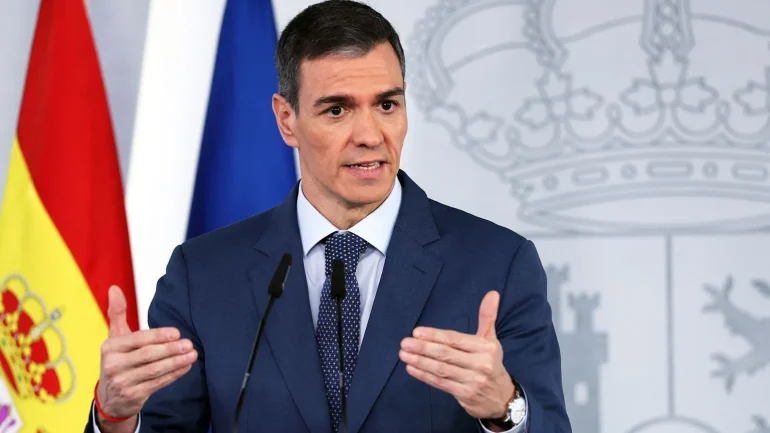
Spain’s Prime Minister, Pedro Sánchez, dismissed the report, stating that his government operates based on official communications rather than internal emails. He reiterated that Spain supports cooperation with allies, but only within the bounds of international law.
Tensions have been rising since U.S. President Donald Trump launched strikes against Iran earlier this year, alongside Israel, targeting areas linked to the strategically critical Strait of Hormuz. Iran responded by restricting shipping through the waterway, a vital artery for global oil transport.
The U.S. has since criticized European allies for what it sees as insufficient support. Pentagon Press Secretary Kingsley Wilson expressed frustration, saying that despite extensive American backing over the years, some allies have not reciprocated during this conflict.
Spain’s refusal to grant access to key military bases, including Naval Station Rota and Morón Air Base, has become a focal point of the dispute.
Meanwhile, the United Kingdom has taken a more supportive role. Prime Minister Keir Starmer stated that while full-scale involvement is not in Britain’s interest, the UK has allowed U.S. forces to use its bases and has participated in defensive operations, including intercepting Iranian drones.
The Pentagon memo also reportedly floated broader retaliatory measures, such as reconsidering U.S. diplomatic support for European territorial claims, including the Falkland Islands—a sensitive issue long disputed by Argentina and the UK.
U.S. Defense Secretary Pete Hegseth added fuel to the debate, arguing that Europe has relied too heavily on American protection and should take greater responsibility, especially given its dependence on the Strait of Hormuz for energy supplies.
Despite the heated rhetoric, European leaders are urging unity. Italian Prime Minister Giorgia Meloni called NATO a “source of strength” and stressed the importance of reinforcing cooperation between Europe and the United States.
Germany also dismissed any suggestion that Spain’s membership could be in jeopardy, reaffirming its place within the alliance.
While the Pentagon memo did not propose a U.S. withdrawal from NATO or the closure of American bases in Europe, it did highlight growing friction within the alliance—raising questions about how unified NATO can remain as geopolitical tensions continue to escalate.