
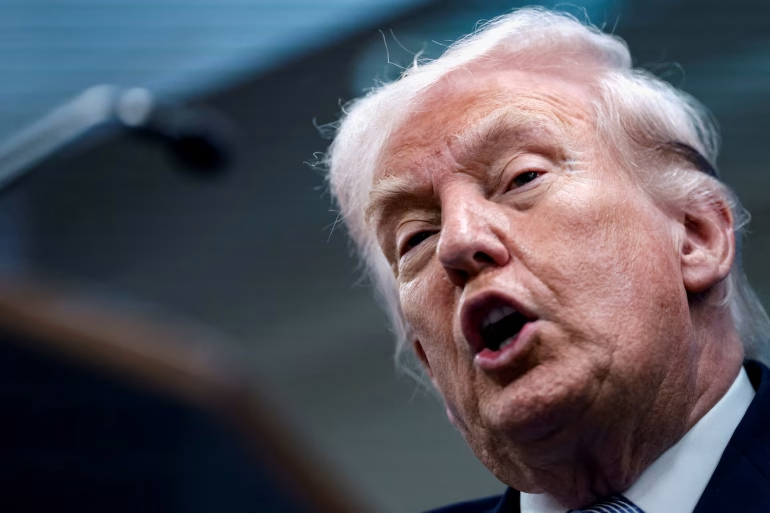
President Donald Trump informed Congress on Friday that the war with Iran has officially “terminated,” aiming to avoid the need for lawmakers to authorize continued military action.
In a letter sent to Capitol Hill, the president argued that a ceasefire with Iran, which he has extended indefinitely, ends the legal requirement for congressional approval. The move comes as the conflict hits a key 60-day limit set by the 1973 War Powers Resolution. Under that law, the president must either withdraw U.S. forces or get Congress to approve the operation after 60 days.
“There has been no exchange of fire between the United States and Iran since April 7, 2026,” Trump wrote. “The hostilities that began on February 28, 2026, have terminated.”
The White House is using the ceasefire to claim that the 60-day clock has stopped. Defense Secretary Pete Hegseth supported this view during a Senate hearing the day before, saying the pause in fighting means the deadline no longer applies.
However, the situation remains complicated. U.S. forces continue a military blockade of Iranian ports, and roughly 50,000 American troops are still stationed in the Middle East. Pentagon officials say forces remain ready to strike again if peace talks fail. Trump told reporters he recently gave Iran a “final proposal” but expressed frustration with the country’s government, calling it “disjointed” and saying he was “not satisfied” with their progress toward a deal.
Growing Divide in Congress
The president’s letter seeks to prevent a political fight in Washington, but opposition is growing. Many Democrats and some Republicans argue that Trump must now end the military campaign since the 60-day mark has passed.
On Thursday, Sen. Susan Collins of Maine became the first Republican senator to vote against the administration’s position. Collins, who faces a tough re-election race, stated that the deadline “is not a suggestion; it is a requirement.”
Public support for the war has also weakened as it enters its second month without a clear plan to bring troops home. Trump pushed back against critics, saying it is unconstitutional for Congress to force him to seek approval. He claimed past presidents have often ignored the 60-day rule.
Democrats like Sen. Tim Kaine of Virginia disagree strongly. Kaine called the White House’s argument “just wrong” and urged Republicans to join Democrats in holding the administration accountable, especially given the war’s unpopularity with voters.
As stalled talks continue and tensions linger in the region, the coming weeks will test whether Trump can maintain enough Republican support to keep the operation going without formal approval from Congress.