
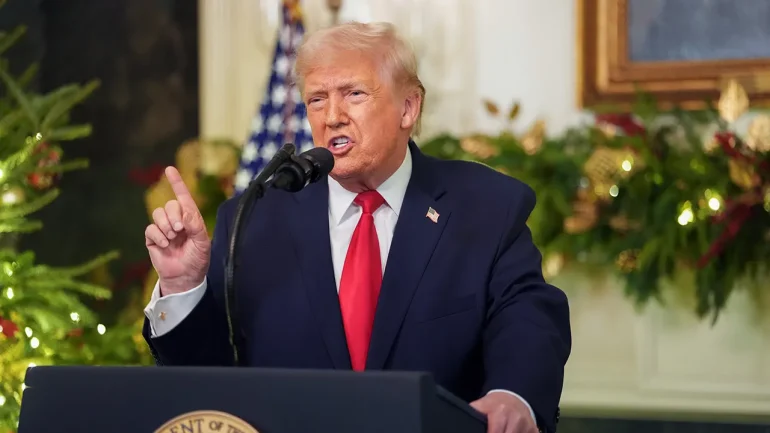
As the United States prepares to celebrate its 250th anniversary, a new initiative launched by Donald Trump is drawing national attention for highlighting the role Christianity played in the country’s history.
The program, called Freedom 250, includes a White House prayer anthology, faith-centered events, and traveling educational exhibits designed to commemorate the nation’s founding. Supporters say the initiative recognizes the religious beliefs that influenced many early American leaders and celebrates the country’s tradition of religious freedom.
At the same time, the program has sparked debate among historians and religious scholars about how prominently Christianity should be featured in government-backed anniversary events.
Highlighting Faith in America’s Founding
One of the centerpiece materials released through Freedom 250 is a White House prayer anthology that collects prayers and historical reflections tied to key moments in American history.
The opening pages describe English colonists arriving at Cape Henry in present-day Virginia and dedicating the land to God in prayer. The story is intended to illustrate how Christianity accompanied early English settlements in North America.
Some historians note that there is limited historical evidence documenting the specific prayer described. Still, supporters of the anthology say the overall message reflects the strong religious convictions that were common among many early settlers and leaders.
The Freedom 250 program also includes several faith-focused events. One initiative called “America Prays” encourages Americans to gather weekly with friends or neighbors for prayer. Another planned event on the National Mall will bring together faith leaders and religious performers in a large national gathering.
Freedom 250 operates separately from America250, a bipartisan organization created by Congress to coordinate official celebrations for the country’s 250th birthday.
Partnerships with Faith-Based Organizations
Many organizations partnering with Freedom 250 have Christian roots. These include National Religious Broadcasters, Angel Studios, Museum of the Bible, and Pray.com.
The initiative also collaborates with WallBuilders, founded by historian and activist David Barton, who has long argued that Christianity played a central role in shaping American government and culture.
Supporters say these partnerships help present a perspective on American history that acknowledges the influence of faith on the country’s founding ideals.
Traveling “Freedom Trucks”
Another major element of the initiative is a set of traveling exhibits known as the “Freedom Trucks.” These mobile museums will tour the country, sharing stories about the American Revolution and key moments in the nation’s early history.
The exhibits were developed with help from PragerU and Hillsdale College. Many displays highlight references to God found in historic documents and speeches.
For example, exhibits discussing the Declaration of Independence point to phrases referencing a “Supreme Judge of the World” and “divine Providence.” Organizers say these references help show how faith shaped the language and ideas surrounding liberty during the founding era.
Advisers involved in the project say ignoring these elements would leave out an important part of American history.
A Tradition of Faith in National Celebrations
Religion has often been referenced during major national anniversaries.
During the country’s centennial in 1876, Ulysses S. Grant encouraged Americans to offer gratitude to God for the nation’s blessings. In 1926, Calvin Coolidge spoke about the importance of faith in sustaining the principles of liberty outlined in the Declaration of Independence. And during the bicentennial in 1976, Gerald Ford reflected on the spiritual convictions that inspired many of the founders.
Supporters of Freedom 250 say the program continues this tradition by recognizing the role religion has played throughout American history.
A Conversation About America’s Identity
As the 250th anniversary approaches, the Freedom 250 initiative has sparked a broader conversation about how the nation’s history should be remembered.
Many historians agree that Christianity influenced aspects of American culture and political thought. At the same time, they note that the country was also shaped by Enlightenment ideas, diverse religious traditions, and the constitutional commitment to religious liberty.
For many Americans, the anniversary will be an opportunity to reflect on both the nation’s spiritual heritage and its founding principle of freedom of belief. The discussion surrounding Freedom 250 highlights how deeply people care about the story of America—and how that story continues to evolve 250 years after the nation’s founding.