
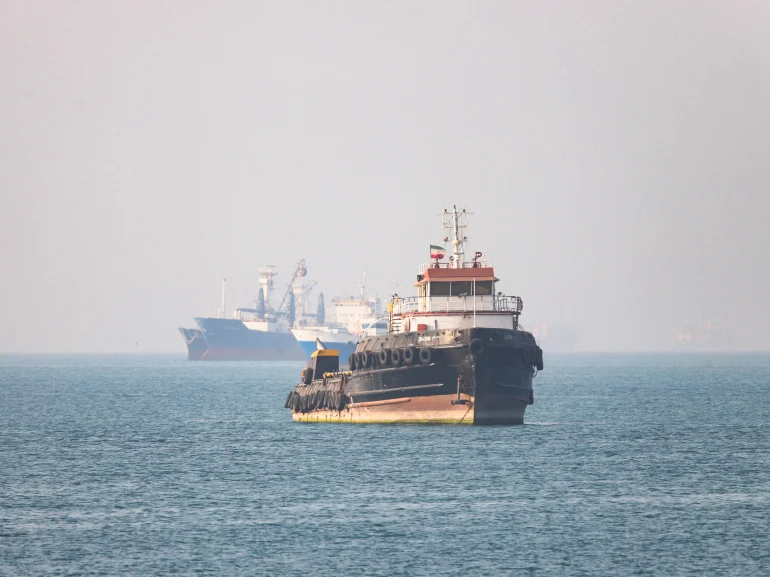
Tensions in the Middle East escalated sharply on Monday as Iran launched its first missile and drone attacks on the United Arab Emirates since a U.S.-Iran ceasefire took effect in early April. At the same time, Iranian forces targeted ships in the strategic Strait of Hormuz. The United States responded forcefully, destroying six Iranian small boats that tried to interfere with commercial shipping.
Attacks on the UAE
UAE authorities reported that Iran fired at least four cruise missiles toward its territory. Three were intercepted by air defenses over UAE waters, while the fourth landed in the sea. Air raid sirens sounded multiple times across the country as defenses continued to handle ongoing missile and drone threats.
A fire broke out at the Fujairah Oil Industry Zone following a suspected Iranian drone strike. Three Indian nationals suffered minor injuries and were hospitalized. Separately, the U.K. Maritime Trade Operations Center reported a commercial vessel on fire off the UAE coast, though the exact cause remains unconfirmed. UAE officials also said two Iranian drones targeted a tanker owned by the state energy company ADNOC, with no injuries reported on board.
Incidents in the Strait of Hormuz
Iran fired two drones at the ADNOC tanker and launched other attacks using cruise missiles, drones, and small boats against vessels in the waterway. One South Korean cargo ship was damaged in the attacks, according to President Trump. South Korean media had earlier reported an explosion on a commercial vessel in the area.
Oman also reported an attack on a residential building housing workers in the Musandam Peninsula, near the Strait of Hormuz. Two foreign nationals were moderately wounded, and four vehicles were damaged.
U.S. Response and Project Freedom
U.S. Central Command confirmed that Iran targeted both commercial and military vessels under American protection. In response, U.S. forces destroyed six Iranian small boats attempting to interfere with shipping.
Two commercial vessels successfully transited the Strait of Hormuz on Monday under the new Project Freedom initiative announced by President Trump. The operation aims to guide ships that have been stranded in the Persian Gulf for weeks through the vital waterway.
Adm. Brad Cooper, commander of U.S. Central Command, said U.S. forces defeated every threat “through the clinical application of defensive munitions.” He warned Iranian vessels to stay clear of U.S. assets. Iran’s state media denied that any of its boats were destroyed.
Trump’s Statements
President Trump issued strong warnings to Iran. In an interview with Fox News, he said that if Iran targets U.S. ships, they would be “blown off the face of the Earth.” He described the current U.S. naval blockade of Iranian ports as “the greatest military maneuver in history” and noted that U.S. bases remain ready for further strikes.
On Truth Social, Trump confirmed the damage to the South Korean ship and suggested South Korea should join the mission against Iran. He also said Secretary of Defense Pete Hegseth and Joint Chiefs Chairman Gen. Dan Caine will brief reporters on Tuesday.
Diplomatic Efforts
Despite the violence, diplomatic activity continues. The U.S. and Gulf states, including Bahrain, are preparing a new U.N. Security Council resolution to hold Iran accountable for its actions in the Strait of Hormuz. The draft would demand that Iran stop laying sea mines, end tolling efforts, and disclose mine locations.
Iran claims it has received a U.S. response to its latest 14-point peace proposal and says it wants to end the conflict rather than simply extend the ceasefire. Trump has indicated he is likely to reject the proposal, stating that Iran “has not paid a big enough price.”
The situation remains fluid, with both sides asserting control over the Strait of Hormuz, a critical chokepoint for global oil shipments. Further updates are expected following Tuesday’s Pentagon briefing.