
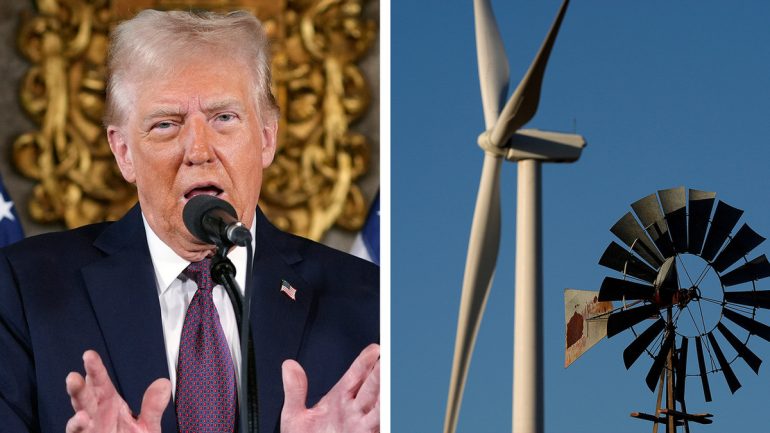
President Donald Trump renewed his strong opposition to wind energy on Tuesday, saying he wants to prevent the construction of new wind turbines across the United States during his presidency. His remarks came during a White House meeting with Irish Prime Minister Micheál Martin, where energy policy unexpectedly became a central topic.
Speaking from the Oval Office, Trump made his position clear, declaring, “I’m proudly telling you that we’re going to try and have no windmills built in the United States.” He doubled down on his criticism by adding, “They’re very bad environmentally. They kill the birds, they’re unsightly, they make a lot of noise. And for some reason, the environmentalists love windmills.”
The comments reflect a long-running stance from Trump, who has repeatedly argued that wind energy is both ineffective and harmful. During the meeting, he also took aim at European countries that rely heavily on wind power, suggesting that widespread turbine use has come at the cost of natural beauty. He specifically pointed to Scotland, where he has previously fought wind development near his golf properties, arguing that turbines “destroy views.”
Trump’s opposition to wind energy predates his political career. Years before launching his first presidential campaign in 2016, he was involved in a legal and public battle against offshore wind projects planned near his golf resort in Scotland. At the time, he argued that the turbines would hurt tourism and diminish the landscape. That dispute helped shape what has become a defining and consistent view of his approach to renewable energy.
Since returning to the White House, Trump has continued to act on those beliefs. His administration has made multiple moves aimed at slowing or stopping wind energy development, particularly offshore projects. In recent months, officials have explored policy options that could limit permits, delay approvals, or increase regulatory hurdles for wind farms.
In a separate set of remarks reported the same day, Trump reiterated his goal in even clearer terms, saying he wanted “to have no wind turbines built during my administration.” He again emphasized his belief that wind energy is “very bad environmentally,” a claim that contrasts with the views of many scientists and policymakers who see wind power as a key tool in reducing carbon emissions.
The timing of Trump’s comments is notable. According to reports, his administration is also weighing a potential $1 billion deal involving TotalEnergies, which is leading offshore wind projects in the United States. While details of the deal remain unclear, it highlights the tension between ongoing investment in renewable energy and the administration’s apparent efforts to curb its expansion.
Wind energy has grown significantly in the U.S. over the past decade, becoming one of the fastest-growing sources of electricity. Supporters argue that it provides a cleaner alternative to fossil fuels, reduces greenhouse gas emissions, and helps diversify the nation’s energy supply. Critics, including Trump, counter that wind power is unreliable, expensive, and disruptive to local environments.
Trump has frequently raised concerns about bird deaths linked to wind turbines, as well as complaints about noise and aesthetics. While studies have shown that turbines can impact wildlife, many experts note that other human activities—such as buildings, vehicles, and domestic cats—pose a far greater threat to bird populations.
Still, Trump’s rhetoric suggests that wind energy will continue to face strong resistance at the federal level. His administration’s approach could shape the future of renewable energy development in the United States, particularly as global demand for cleaner energy sources continues to rise.
For now, Trump appears firmly committed to his position. As he put it during Tuesday’s meeting, despite widespread support for renewable energy, “we’re going to try” to ensure that no new windmills are built—setting up a potential clash between federal policy and the broader push toward cleaner power.