
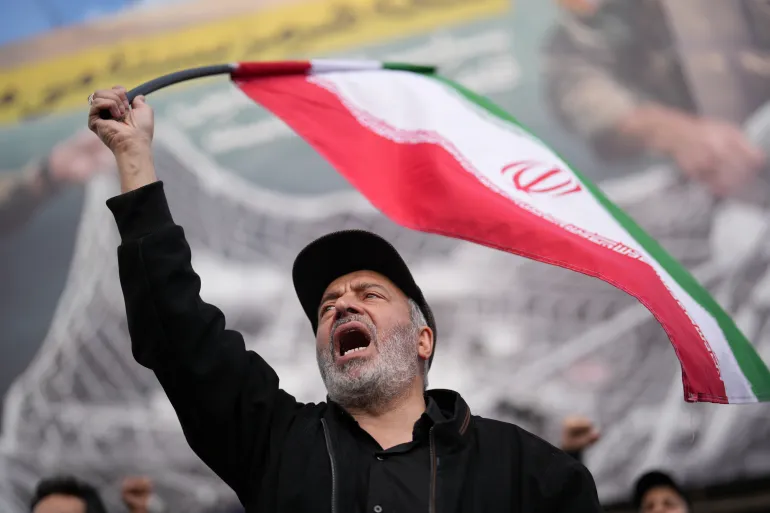
After 40 days of intense fighting, the United States, Israel, and Iran have agreed to a two-week ceasefire. The truce, announced on April 8, 2026, aims to pause the conflict that began on February 28 and has brought the Middle East close to a wider war. Pakistan helped broker the deal, which includes the United States and Israel stopping attacks on Iran while Tehran reopens the Strait of Hormuz to shipping.
The agreement comes after weeks of air strikes, missile exchanges, and threats that disrupted global oil and gas supplies. Closing the Strait of Hormuz—a narrow waterway that carries about one-fifth of the world’s oil and gas—had caused prices to spike sharply. Both sides now claim progress toward peace, but experts warn the ceasefire is fragile, with early reports of violations and deep disagreements still unresolved.
What the United States Has Agreed To
Under the deal, the U.S. will halt its military strikes on Iran for two weeks. President Donald Trump stated that American military goals had been met and that Iran had promised to reopen the Strait of Hormuz immediately and safely.
Trump described Iran’s 10-point proposal as a “workable basis” for negotiations. Though the full details have not been released publicly, reports say the plan includes:
- A commitment from the U.S. to non-aggression
- Iran maintaining some control over passage through the Strait of Hormuz, coordinated with its armed forces
- Acceptance of Iran’s nuclear enrichment program (with possible limits)
- Lifting of U.S. sanctions and resolutions against Iran
- Release of frozen Iranian assets abroad
- Withdrawal of U.S. combat forces from regional bases
- Compensation for damages to Iran, possibly funded by fees on ships using the strait
- Ratification of the agreement through a binding United Nations Security Council resolution
Trump has insisted that Iran’s nuclear stockpile would still be addressed in any final deal. He also suggested China, Türkiye, and Egypt played roles in bringing Iran to the table. However, the U.S. has not publicly agreed to all points in Iran’s proposal. Trump later said there would be “no uranium enrichment” in the long term, though talks on sanctions relief could continue. U.S. military leaders have emphasized they are ready to resume attacks if Iran does not follow through.
What Iran Has Agreed To
Iran has said it will stop its retaliatory strikes if U.S. and Israeli attacks end. Foreign Minister Abbas Araghchi confirmed that Iran would allow safe passage for ships through the Strait of Hormuz for 14 days, coordinated by Iranian forces. Iran and Oman may also charge fees on transiting ships, with Iran’s share reportedly going toward reconstruction after the war.
Iran views itself as being in a stronger position than before the conflict began. It has refused to discuss limits on its ballistic missile program, which it used in retaliation during the fighting.
Israel’s Position
Israel has agreed to stop attacks on Iran as part of the ceasefire. However, Prime Minister Benjamin Netanyahu made it clear that the truce does not cover Israel’s ongoing operations against Hezbollah in Lebanon or its activities in southern Lebanon. This stance appears to conflict with Pakistan’s claim that the deal includes a halt to fighting in Lebanon.
Israeli strikes in Lebanon continued even after the announcement, raising concerns about the ceasefire’s scope. Analysts note that Israel has a history of using ambiguous agreements to resume operations when it sees an advantage.
What Happens Next?
Negotiations between U.S. and Iranian officials are scheduled to begin in Islamabad, Pakistan, on Friday, April 10, 2026. Pakistani Prime Minister Shehbaz Sharif invited both sides to work toward a lasting agreement.
The two-week window is meant to give time to turn the temporary truce into a more permanent deal. However, experts say major gaps remain. The sides disagree on key issues such as sanctions, nuclear enrichment, control of the Strait of Hormuz, and U.S. military presence in the region.
Analysts like Robert Geist Pinfold from King’s College London describe the deal as uncertain, noting that both sides are claiming victory while violations have already been reported. Andreas Kreig, another expert from the same institution, believes Iran feels it can endure more pressure than the U.S. and may resist major concessions. Trita Parsi, an Iran expert, pointed out that the U.S. military threats now carry less weight after the recent fighting.
The ceasefire has drawn mixed reactions. Some countries welcomed the pause and praised Pakistan’s mediation, while others expressed caution. Pro-Iran groups in Iraq also announced a two-week halt in attacks on “enemy bases.”
A Fragile Step Toward Peace
This two-week ceasefire offers a brief chance to step back from escalation and talk through differences. Reopening the Strait of Hormuz should help ease pressure on global energy markets. Yet the deal leaves many tough questions unanswered, and early reports of continued strikes—especially involving Lebanon—show how quickly things could unravel.
Whether the upcoming talks in Islamabad can bridge the deep divide between Washington and Tehran remains to be seen. For now, the region—and the world—will be watching closely to see if this pause leads to real stability or simply delays the next round of conflict.