
The House of Representatives voted Thursday to approve a Senate-passed bill that will fund most of the Department of Homeland Security (DHS), bringing an end to a record 75-day partial shutdown of the agency.
President Donald Trump had pressed lawmakers to pass the measure and promised to sign it into law. The bill passed “by voice vote,” meaning members simply shouted their approval instead of recording individual votes.
The legislation will reopen major parts of DHS but does not include new funding for Immigration and Customs Enforcement (ICE) or Customs and Border Protection (CBP). Democrats had demanded changes to immigration enforcement policies, such as requiring body cameras for agents and restricting raids in sensitive areas like schools and hospitals. Although ICE and border enforcement continued operating with existing funds during the shutdown, Republicans plan to push in the coming weeks to secure long-term funding for both agencies through the rest of Trump’s term.
The House acted just before a critical deadline. Homeland Security Secretary Markwayne Mullin had warned that without action by Thursday, emergency funds would run out and thousands of workers would miss paychecks.
Lawmakers in both the House and Senate were preparing to leave for a weeklong recess at the end of the day. They still needed to address a separate deadline to prevent a foreign intelligence surveillance program from expiring.
Once President Trump signs the bill later Thursday, key DHS agencies—including the Federal Emergency Management Agency (FEMA), the Coast Guard, the Transportation Security Administration (TSA), and the Secret Service—will be funded through September 30.
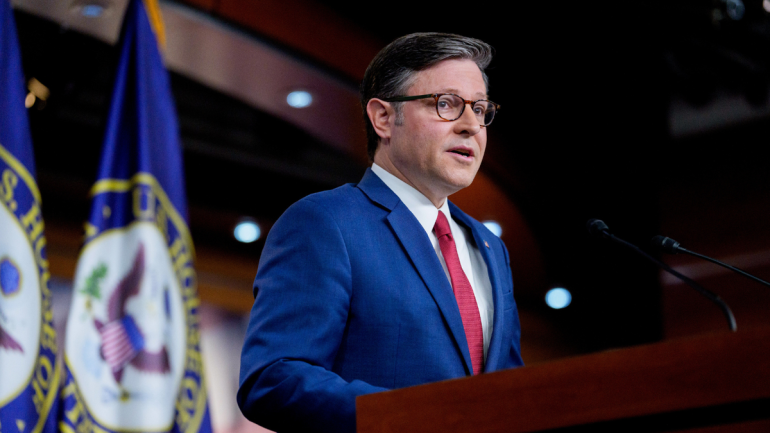
Democrats triggered the shutdown on February 14 after Republicans refused their demands for reforms to the Trump administration’s immigration enforcement practices. In late March, the Senate unanimously passed the current bill, which funds most DHS operations except for ICE and Border Patrol. At the time, House Speaker Mike Johnson, R-La., dismissed the plan as “a joke.”
When asked what had changed since then, Johnson pointed to recent progress on border security funding. On Wednesday, the House passed a budget resolution that opens a path to fund ICE and CBP for the remainder of Trump’s presidency. The Senate had already approved the same resolution.
“We got the budget resolution passed. This is very, very important, because that will ensure that border security and immigration enforcement will continue today and well into the future,” Johnson told reporters after the vote. “Democrats got absolutely nothing for their political charade and shenanigans.”
He added that the deal means no more lines at TSA checkpoints and that federal workers will receive their paychecks.
The budget resolution directs congressional committees to write legislation that would provide about $70 billion for ICE and Border Patrol over the next three years. Using a special process called budget reconciliation, Republicans could pass this funding without needing any Democratic votes in either chamber. As long as nearly all Republicans support it, the GOP would not have to agree to the policy changes Democrats have demanded.
Meanwhile, the House is still waiting for the Senate to send over a short-term extension of the foreign spying program known as FISA Section 702. Lawmakers from both parties warned that letting the program expire would seriously harm national security.