
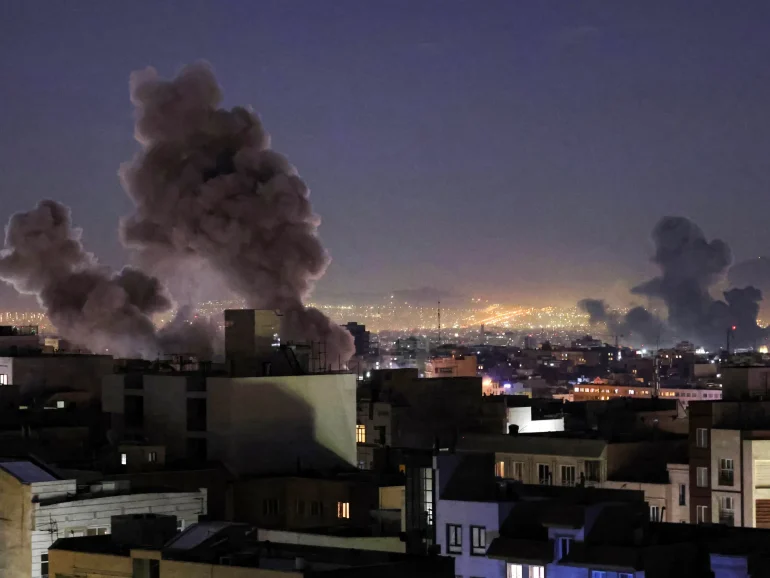
The escalating conflict in the Middle East has taken a deadly turn, with President Donald Trump warning that more American lives could be lost as the United States and Israel continue military operations against Iran. The crisis began when joint U.S.-Israeli strikes killed Iran’s Supreme Leader Ayatollah Ali Khamenei, sparking massive Iranian retaliation and drawing in other groups like Hezbollah.
At least three U.S. service members have been killed, and five more seriously wounded, according to U.S. Central Command. The deaths occurred amid Iranian counterattacks on U.S. bases in the region, including in Kuwait. In a video statement on Truth Social, Trump paid tribute to the fallen troops as “true American patriots” but acknowledged the harsh reality ahead. “Sadly, there will likely be more before it ends,” he said, adding that combat operations would continue “until all of our objectives are achieved.” He did not specify what those objectives are but suggested the campaign could last four to five weeks or longer.
The conflict widened quickly after Khamenei’s death. Iran-backed Hezbollah, the militant group in Lebanon, entered the fight by launching attacks on an Israeli army base, describing it as revenge for the supreme leader’s killing. Israel responded with strikes on Hezbollah targets in Lebanon, and explosions have been reported in areas like Beirut and even Cyprus. This marks a major escalation, pulling the region closer to a broader war.
One of the most tragic incidents has been a strike on a girls’ elementary school in Minab, southern Iran. The Shajareh Tayyebeh School, located near a military base, was hit during the initial wave of attacks. Iranian officials report the death toll has risen to at least 148 (with some sources citing up to 165), mostly young students, and dozens more injured. Satellite imagery and videos show the school was separate from the base since at least 2016. U.S. Central Command said it takes reports of civilian harm seriously and is investigating, while emphasizing efforts to minimize unintended casualties. Israel has not immediately commented.
The war’s effects are rippling far beyond the battlefield. Iranian retaliation has targeted U.S.-friendly sites in Gulf states, including missile strikes causing explosions and smoke in Dubai (near ports and hotels), Bahrain, Qatar, and other areas. Airspaces across Iran, Iraq, Kuwait, Israel, Bahrain, and Qatar have closed or restricted, leading to massive travel chaos. Major airlines like Etihad, Qatar Airways, Lufthansa, British Airways, and others have canceled or suspended flights to the Middle East. Thousands of flights worldwide have been delayed or grounded, stranding passengers and disrupting global travel.
An Iranian deputy foreign minister told CNN that Trump had crossed “a very dangerous red line” by killing Khamenei, a key religious figure for Shiite Muslims worldwide. Iran has warned it has no choice but to respond, including pressuring Gulf states to close U.S. bases or face attacks on those sites. Some briefings to Congress have suggested Iran was not planning strikes on U.S. forces unless provoked first, raising questions about the administration’s claims of an imminent threat.
As smoke rises over cities like Dubai and Tehran, and fighting spreads to Lebanon, the region remains on edge. Oil prices have surged due to threats to shipping and energy routes, and countries are scrambling to evacuate citizens amid the uncertainty. The coming days could bring more casualties on all sides as the conflict shows no signs of slowing.