
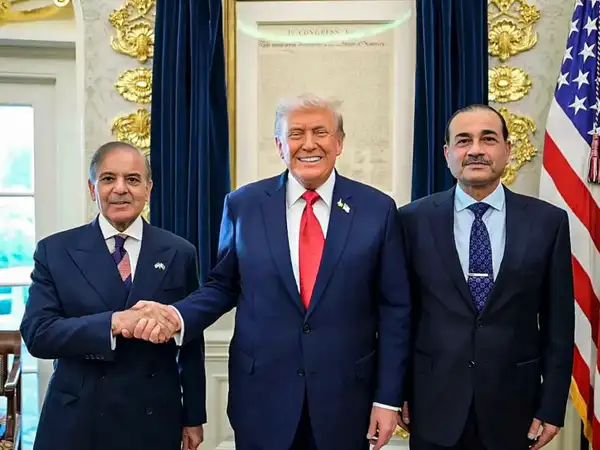
The Trump administration has put forward a 15-point peace proposal aimed at ending the ongoing war with Iran, but Tehran has quickly rejected it. At the same time, the United States and Israel have turned down a counterproposal from Iran. Pakistan has stepped in as a potential intermediary, offering to host talks between the two sides.
The proposal was delivered to Iranian officials through Pakistani channels late Tuesday. According to reports, the plan includes steps such as rolling back Iran’s nuclear program, limiting its missile capabilities, reopening the Strait of Hormuz for international shipping, and providing some sanctions relief in return. Details of the full 15 points have not been made public, but officials describe it as a framework for an immediate ceasefire followed by longer-term negotiations.
Iranian state media and officials dismissed the U.S. offer on Wednesday, calling the demands excessive and unrealistic. One Iranian source told reporters that Tehran would not accept a ceasefire on American terms and instead issued its own list of conditions. A top U.S. official described Iran’s counter-demands as “ridiculous and unrealistic,” according to the Wall Street Journal.
President Donald Trump has given Iran a short window to respond. He previously announced a five-day delay in planned U.S. strikes on Iranian energy infrastructure and power plants, saying there had been some “productive conversations.” Trump warned that if no agreement is reached soon, the U.S. could begin targeting those sites, which would deal a heavy blow to Iran’s economy.
Pakistan’s prime minister has offered to host direct or indirect talks in Islamabad, with some reports suggesting high-level U.S. officials, possibly including Vice President JD Vance, could participate. Iranian state media has continued to deny that serious negotiations are underway, insisting the U.S. is “negotiating with itself.”
Ongoing Military Pressure
Despite the diplomatic efforts, fighting continues. The U.S.-led Operation Epic Fury has entered its fourth week. U.S. Central Command released footage Wednesday showing strikes on Iranian military targets, stating the goal is to degrade capabilities that have threatened American troops and regional partners for decades.
House Speaker Mike Johnson said the operation is “wrapping up” and could conclude in the near future. So far, the conflict has resulted in 13 U.S. service members killed and nearly 300 wounded, though most injuries were minor and more than 255 troops have already returned to duty.
The Pentagon is deploying elements of the 82nd Airborne Division, including its headquarters and the 1st Brigade Combat Team, to the Middle East to support ongoing operations. Israel has also carried out airstrikes on Iranian facilities, including an “Underwater Research Center” in Isfahan used for submarine and unmanned vessel development.
Broader Regional Impact
The war has disrupted global energy markets. Iran has restricted shipping through the Strait of Hormuz, a vital passage for about one-fifth of the world’s oil. In response, Bahrain has proposed a U.N. Security Council resolution that would authorize countries to use “all necessary means” to keep the strait open.
The U.S. State Department issued a worldwide caution advisory for American travelers, warning of possible attacks by groups supportive of Iran and potential disruptions from airspace closures. More than 70,000 Americans have already left the Middle East since late February.
Retired Gen. Jack Keane, a Fox News senior strategic analyst, cautioned against rushing into a ceasefire. He argued that maintaining military pressure is necessary to force Iran to abandon its nuclear ambitions, calling the regime “pathological liars and cheaters.”
As diplomatic channels remain open through Pakistan, both sides continue military operations. The coming days will determine whether the 15-point proposal can serve as a starting point for real negotiations or if the conflict will escalate further.