
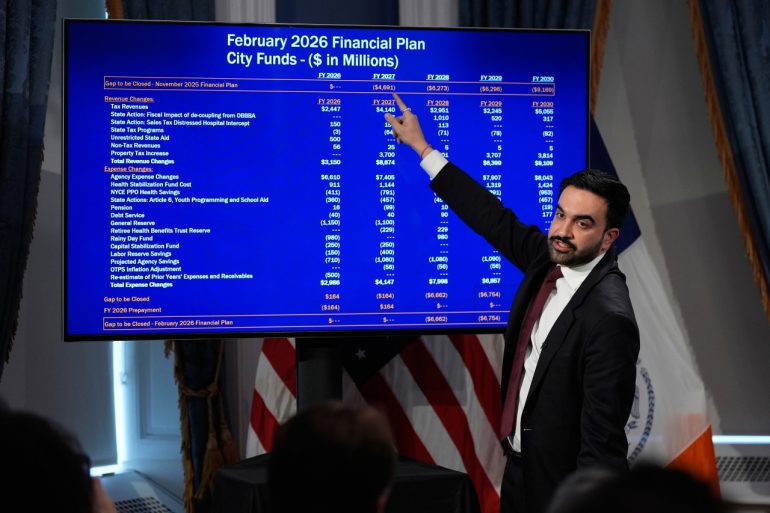
New York City Mayor Zohran Mamdani has put forward a bold and controversial plan in his first budget as mayor. On February 17, 2026, he released a preliminary spending proposal for the fiscal year starting July 1, totaling $127 billion. This is about $5 billion more than the current budget.
The mayor faces a $5.4 billion budget gap over the next two years. He blames this shortfall on poor financial planning from the previous administration under former Mayor Eric Adams, though Adams has claimed he left behind more than $8 billion in reserves. To balance the budget—as required by law—Mamdani has outlined two main options.
His preferred choice is to raise taxes on the wealthiest New Yorkers and profitable corporations. He has pushed for a wealth tax or higher income taxes on those earning over $1 million a year. This would require approval from Governor Kathy Hochul and the state legislature in Albany. Mamdani sees this as the fairest way to raise revenue without hurting everyday residents.
If the state does not act, Mamdani says he will turn to a “last resort”: increasing the city’s property tax rate by 9.5%. This would be the first across-the-board property tax hike in New York City in more than two decades. The change would impact over 3 million residential properties, including single-family homes, co-ops, and condos, plus more than 100,000 commercial buildings. According to budget documents, it would generate about $14.8 billion over four years (or roughly $3.7 billion in the first year). The mayor can adjust property taxes without state permission, but the City Council must approve the increase.
Mamdani has described the property tax hike as the “most harmful path,” arguing it would place a heavy burden on working- and middle-class New Yorkers during an ongoing affordability crisis. He recently received $1.5 billion in new state funding from Hochul, which helps shift some costs (like public health and youth services) from the city to the state. This support has built an unexpected partnership between the progressive mayor and the more centrist governor, especially around expanding child care programs.
However, Hochul has firmly opposed both higher income taxes on the wealthy and any property tax increase. She believes cost-cutting, better accounting, and other savings can close the gap without raising taxes. She called Mamdani’s proposal part of his job to present all options, but not necessarily the final plan.
The City Council Speaker, Julie Menin, also rejected the property tax idea. She said the council wants to explore more savings and revenue sources before adding costs to small property owners and neighborhood businesses.
The proposal has sparked criticism beyond the city. Nassau County Executive Bruce Blakeman, a Republican running for governor, accused Hochul of favoring New York City over upstate and suburban areas. He argued that state funds should go toward tax relief for struggling taxpayers elsewhere.
Mamdani’s budget is just the starting point. It will face months of revisions, negotiations with the City Council, and possible changes before final approval. The mayor’s move highlights ongoing tensions between New York City’s need for revenue and state-level resistance to taxing the rich more heavily.