
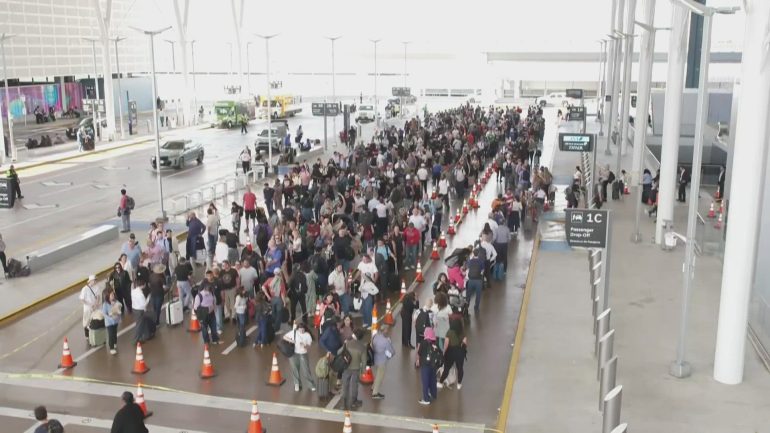
Air travelers across the United States are facing record wait times at airport security checkpoints as a funding shutdown drags into its 41st day. The acting head of the Transportation Security Administration warned lawmakers Wednesday that the situation is becoming critical, with some airports at risk of closing if more workers stay home.
Long security lines have formed at major airports, including LaGuardia Airport in New York and George Bush Intercontinental Airport in Houston. Travelers have endured delays while TSA officers work without pay, dealing with growing frustration on both sides of the checkpoints.
The standoff in Congress centers on funding for the Department of Homeland Security. Senators are scheduled to vote Thursday on a Republican proposal that would provide money for the TSA and most of the Department of Homeland Security—but not for Immigration and Customs Enforcement’s enforcement and removal operations. The plan is widely expected to fail.
Democrats say the Republican bill does not do enough to limit President Donald Trump’s aggressive immigration enforcement efforts. They point to recent deaths of two Americans who were protesting the actions in Minneapolis and demand stronger rules on how federal officers operate. Republicans argue that Democrats are blocking reasonable solutions and putting public safety at risk.
With lawmakers planning to leave Washington for spring break by the end of the week, pressure is growing to end the stalemate. The shutdown has left thousands of TSA officers without paychecks, forcing many to face tough choices just to cover basic bills.
“This is a dire situation,” said Ha Nguyen McNeill, the acting TSA administrator, during a House Homeland Security Committee hearing on Wednesday. She described how unpaid workers are dealing with piling bills, eviction notices, and even donating plasma to make ends meet. Daily callout rates—when officers do not show up for work—have climbed to 11 percent nationwide. At some airports, the rate has topped 40 percent.
McNeill warned that if the situation worsens, officials may have to make hard decisions about which airports can stay open and which ones might have to shut down. More than 480 TSA officers have already quit since the shutdown began. She also noted a more than 500 percent increase in assaults on officers working at checkpoints.
The funding fight is partly the result of a deal President Trump struck with Democrats last fall to end an earlier government shutdown. At that time, the government was funded except for the Department of Homeland Security, which was placed on temporary funding that has now run out.
Trump has largely stayed out of the public debate over how to resolve the current impasse. He initially supported the latest Republican plan but later signaled he would not be satisfied with any agreement that did not fully back his immigration priorities. On Wednesday evening, during a House Republican fundraising dinner, Trump criticized Democrats for refusing to compromise on immigration changes.
The Republican tax cuts bill signed into law last year provided billions of dollars to the Department of Homeland Security, including $75 billion specifically for ICE operations. As a result, immigration officers continue to be paid even while the routine funding for the department remains stalled.
The current Republican proposal includes one new measure supported by both sides: requiring officers to wear body cameras. However, it does not include other changes Democrats have demanded, such as requiring federal agents to wear visible identification, remove face masks during operations, or avoid conducting raids near schools, churches, and other sensitive locations.
Senate Democratic Leader Chuck Schumer of New York said Democrats have pushed for real reforms to ICE from the beginning. Talks between Democrats and the White House, including with border czar Tom Homan, had shown some progress earlier in the week but broke down over the weekend.
House Speaker Mike Johnson, R-La., accused Democrats of knowing their position is unreasonable. Senate Majority Leader John Thune said Congress could move forward quickly if Democrats offered a “more realistic” proposal. When asked about a possible short-term stopgap funding bill, Thune replied, “We’ll see.”
The shutdown has created real hardship for TSA workers. Officers have reported sleeping in their cars, taking second jobs, and struggling to pay rent—all while being asked to maintain high security standards at the nation’s airports.
As the crisis deepens, both parties face growing public frustration over missed paychecks and travel chaos. Whether lawmakers can reach a deal before leaving town this week will determine if the disruptions continue or if normal operations can resume at America’s busy airports.