
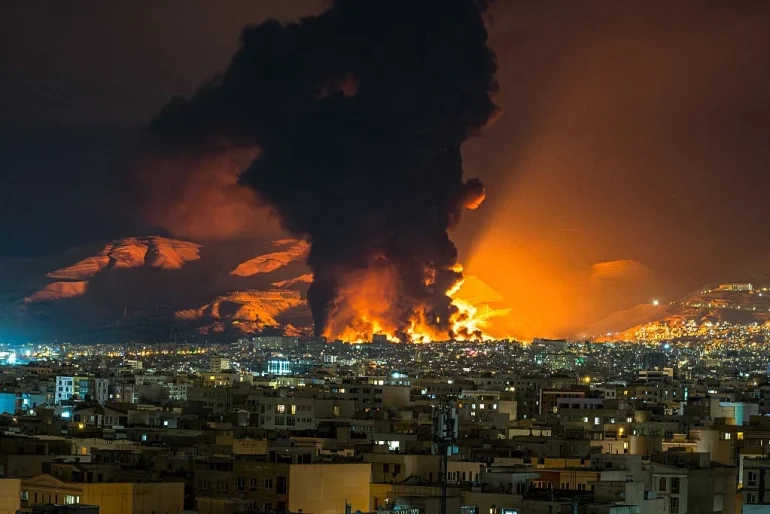
The first six days of the escalating war between the United States and Iran have already cost American taxpayers at least $11.3 billion, according to estimates from the Pentagon reviewed by lawmakers. The massive price tag comes as the conflict intensifies in the Middle East, disrupts global oil markets, and raises concerns about the economic and security impact of a prolonged war.
Officials familiar with the Pentagon’s calculations said the U.S. military spent roughly $5.6 billion on munitions in just the first two days of the conflict alone. The spending reflects the heavy use of missiles, bombs, and other weapons as U.S. and allied forces targeted Iranian military infrastructure.
The war has also taken a human toll. In less than two weeks of fighting, more than 1,000 people in Iran and hundreds across the region have been killed, including seven American soldiers who died in retaliatory attacks on U.S. positions.
Rising oil prices and global disruptions
The conflict has shaken global energy markets, especially after the near-total shutdown of the Strait of Hormuz, one of the world’s most critical shipping lanes. Roughly 20% of global oil shipments normally pass through the narrow waterway.
As a result, U.S. gas prices have climbed to a national average of $3.59 per gallon, with energy markets reacting to fears of prolonged disruptions.
Iranian officials have warned that oil prices could rise dramatically if the conflict continues. Military spokesperson Ebrahim Zolfaqari warned that oil could reach $200 per barrel, arguing that the stability of global energy markets depends on security in the region.
Energy analysts say such statements are partly meant to signal Iran’s leverage. Rachel Ziemba, an energy expert at the Center for a New American Security, said Tehran understands that rising energy prices can create economic pressure on the United States and its allies.
Despite the threats, crude oil was trading around $88 per barrel late Wednesday, though prices have been climbing steadily.
U.S. plans to release oil reserves
In response to rising prices, the United States plans to release oil from the Strategic Petroleum Reserve in coordination with other members of the International Energy Agency.
President Donald Trump said the U.S. would tap the reserve “very quickly” to help stabilize fuel prices. The reserve currently holds about 415 million barrels of oil, stored in underground salt caverns along the coasts of Texas and Louisiana, though it has the capacity to hold about 714 million barrels.
Energy Secretary Chris Wright said the U.S. plans to release 172 million barrels over the next 120 days as part of a broader international effort to inject about 400 million barrels into global markets.
Trump said the government would eventually replenish the reserve once the situation stabilizes.
Fighting spreads across the region
The conflict has also spilled into surrounding waters and countries. Iraqi officials reported that oil port operations were “completely stopped” after an attack on two foreign tankers carrying Iraqi fuel oil in the country’s territorial waters. One tanker was reportedly struck by an explosion about 30 miles from the Iraqi coast, killing at least one person and forcing rescue crews to evacuate dozens of others.
Meanwhile, Trump said U.S. forces had severely damaged Iran’s naval capabilities, claiming the military had destroyed 58 Iranian naval ships and about 30 mine-laying vessels used to threaten shipping routes.
“We knocked out their navy,” Trump told supporters at an event in Kentucky, adding that U.S. forces would continue operations until the threat to shipping in the region is eliminated.
Cyberattacks and security concerns
The war is also expanding into cyberspace. An Iranian hacking group known as Handala claimed responsibility for a cyberattack on Stryker, a Michigan-based medical device company.
The group said the attack was retaliation for a February missile strike that killed 175 people at an Iranian girls’ school. Stryker said it had no indication of ransomware or malware and believes the breach has been contained, though an investigation is ongoing.
At the same time, federal authorities have warned law enforcement agencies that California could potentially be targeted by drone attacks linked to the conflict, though officials emphasized there is no confirmed or imminent threat.
Evacuations and uncertainty ahead
As tensions rise, the U.S. government has helped evacuate more than 43,000 Americans from the Middle East since late February. The State Department has organized dozens of charter flights to bring citizens home, though officials say some Americans have declined assistance.
Iran’s government has also signaled that a quick end to the war may be difficult. President Masoud Pezeshkian said Iran would not agree to a ceasefire without security guarantees and reparations for the damage caused by U.S. and Israeli military strikes.
Meanwhile, Trump has described the conflict in mixed terms, at one point calling it a “little excursion” but also acknowledging its broader impact.
“It’s both,” he said when asked whether the situation should be considered a war. “For them it’s a war. For us it turned out to be easier than we thought.”
Even so, with billions already spent, rising oil prices, and attacks spreading beyond Iran’s borders, the cost of the conflict—both financially and strategically—appears likely to grow.